Resources
Skyhigh Security Predictions: 2026 Is the Year AI Forces a New Blueprint for Enterprise Security
By Thyaga Vasudevan - EVP of Product
December 12, 2025 7 Minute Read

As enterprises enter 2026, the conversation is shifting fast. The past decade was defined by digital transformation. The next decade will be defined by AI transformation. But this shift isn’t as simple as adopting large language models or launching internal AI copilots. It requires rethinking how organizations operate, how they protect data, and how they balance innovation with trust and safety.
Across architecture, product, and security research, several themes are already emerging. Here are the Skyhigh Security predictions shaping the year ahead.
1. Leaving Digital Transformation Behind: 2026 Becomes the Year of AI Transformation
In 2026, enterprises will learn that adopting AI is not a technology race but an operational shift. Employees are using AI tools faster than governance can keep up, and without strong data protections, organizations lose visibility into what sensitive information is being shared, where it goes, and how it persists.
 As AI models, copilots, and agents become embedded in workflows, a critical reality emerges: AI is only as safe and accurate as the data it interacts with. Traditional security can see traffic, but not the content, sensitivity, lineage, or sovereign requirements that AI systems consume and act upon.
Security solutions must now understand:
- What data is entering prompts and whether it should
- How agentic AI systems interpret intent and make autonomous decisions
- What content MCP or API-driven workflows are allowed to touch, move, or generate
- Whether sensitive or sovereign data is being sent to external models
- How AI stores, retains, or reuses information over time
In 2026, organizations will recognize that safe AI adoption requires security that extends far beyond guarding access. It demands:
- Prompt-level visibility and enforcement
- Content classification at the moment of interaction
- Intent-aware controls that distinguish safe actions from risky ones
- Governance for agentic AI workflows that act on behalf of users
- Continuous oversight of model inputs, outputs, and long-term retention
- Unified policies across browser, SaaS, cloud, on-prem, and AI environments
The organizations that thrive will treat AI transformation as a disciplined, data-first effort ensuring AI only interacts with governed, accurate, compliant content. Those that don’t will struggle with trust, leakage, and poor AI outcomes.
2. Cloud Security’s Cost, Complexity & Data Repatriation Will Reshape Architectures in 2026
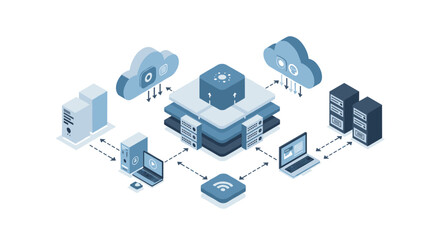
Enterprises are realizing that cloud-only inspection is no longer financially or operationally sustainable. In 2026, four forces collide:
- Rising cloud inspection costs from AI-driven data growth
- Sovereignty and compliance rules that block routing sensitive data out of region
- AI workloads generating far more content and traffic than cloud tools were built to inspect
- A surge in data repatriation, as organizations pull sensitive or high-volume workloads back on-prem for control, cost predictability, and performance
- These pressures create a tipping point: routing all inspections through centralized cloud engines becomes too expensive, too risky, and too restrictive, especially for regulated industries
Hybrid security will become the dominant model in 2026. Enterprises will expect to:
- Enforce controls locally or in-region when required
- Use cloud inspection selectively, not universally
- Maintain one unified policy across cloud, on-prem, browser, SaaS, and AI
- Place enforcement where it is most compliant and cost-effective
Hybrid isn’t legacy—it’s the new architecture for sovereignty, cost efficiency, and AI-scale security.
3. The World Now Runs in the Browser – Securing It Is Non-Negotiable

By 2026, the browser has become the primary workspace for the modern enterprise. SaaS adoption, cloud migration, and the rapid rise of AI assistants mean that more business activity, collaboration, data analysis, code generation, document handling, and even regulated workflows now happens inside the browser than in any traditional application.
This shift makes the browser the true last mile of enterprise risk. Sensitive content is viewed, edited, copied, uploaded, pasted into AI tools, and shared across integrated SaaS ecosystems, all through a browser session. As a result, the browser is no longer just a delivery mechanism for web applications; it has become a central control point for data governance, AI safety, user behavior insights, and real-time policy enforcement.
This new reality introduces several emerging risks:
- AI and SaaS copilots interacting directly with sensitive content
- Shadow AI usage that bypasses existing network or endpoint controls
- Unmonitored data movement through uploads, downloads, copy/paste, or screen sharing
- Regulated or sovereign data flowing into global cloud AI services
- Contractors and third-party users handling sensitive data via unmanaged devices
Large enterprises consistently cite challenges such as user resistance, the operational burden of mandated browser migration, and limited coverage for non-browser workflows or legacy systems.
For most organizations, the 2026 priority will not be adopting a new browser, it will be establishing consistent, scalable controls around the browser they already depend on. That means securing:
- How users interact with data
- How AI tools consume and retain content
- How SaaS applications exchange and store sensitive information
- How unmanaged or hybrid devices access corporate workloads
Enterprises will increasingly look for security models that strengthen the existing browser environment, provide real-time insight into user behavior and content interactions, and extend Zero Trust principles directly to the point where data is used.
4. DSPM Evolves from Detection to Prevention Becoming a Core Security Layer
In 2026, DSPM will accelerate from a visibility tool to a real-time compliance and prevention layer, driven by rising geopolitical tension, expanding data sovereignty rules, and a wave of new privacy regulations worldwide.
With India’s DPDPA officially going live in 2025, enterprises are already adapting to stricter data residency, purpose limitation, and consent requirements. They won’t be alone. The EU is tightening governance under GDPR and AI Act provisions, GCC countries are rolling out updated national privacy frameworks, and APAC regions like Singapore, Japan, Australia, South Korea are strengthening their own cross-border and breach-notification mandates. In the U.S., more than a dozen states are enacting CCPA-style laws with increasingly prescriptive data governance expectations.
Against this global backdrop, CIOs and CISOs face a new reality: compliance is no longer about documenting controls. It is about continuously proving where data is, how it is used, and whether it stays within the boundaries defined by law, contract, and geopolitics.
DSPM becomes essential because it enables:
- Unified visibility across cloud, SaaS, and on-prem data stores
- Real-time understanding of data movement, sensitivity, and lineage
- Automatic enforcement based on regional sovereignty and purpose restrictions
- Continuous compliance evidence for auditors and regulators
- Proactive prevention—not post-incident discovery—of exposure, misuse, or cross-border flow
As AI workloads expand and hybrid architectures return to prominence, organizations will no longer accept DSPM as a passive discovery tool. They will demand DSPM that enforces policy, blocks risky movement, and prevents violations before they occur.

In 2026, DSPM becomes a foundational security and compliance control—not only enabling AI transformation, but ensuring enterprises can survive the next wave of geopolitical, regulatory, and sovereignty-driven pressure.
5. Post-Quantum Risk Enters Strategic Security Planning — Long Before Cryptography Migrates
Quantum-resistant cryptography will not be a widespread enterprise deployment in 2026, but quantum risk will become a strategic planning topic as organizations recognize the implications of “harvest now, decrypt later.” Threat actors are already stealing encrypted archives today with the intent of decrypting them once quantum computing matures, making long-lived, sensitive, or sovereign data the real exposure point, not the cryptography itself.
The enterprises that begin preparing in 2026 will focus less on algorithm migration and more on data survivability and lifecycle governance, including:
- Reducing unnecessary data retention
- Identifying shadow or orphaned archives
- Flagging sovereign or regulated content with long-term sensitivity
- Applying lifecycle policies and access minimization
- Controlling data movement across SaaS, browsers, AI prompts, and third parties
 Post-Quantum Cryptography (PQC) readiness starts with continuous data posture and lifecycle enforcement, not just future cryptography standards. Organizations that adopt data-first governance and hybrid enforcement will materially reduce long-term quantum exposure long before algorithm upgrades are complete.
In short: PQC will not be a deployment priority in 2026, but PQC readiness becomes a planning imperative in industries with regulatory retention, sovereign data obligations, or highly sensitive archives. And the earliest mitigation path is clear: manage the data you have before quantum matters.
The Bottom Line: Security Needs to Protect Data and Applications, not just Network Connectivity
The forces reshaping 2026—AI adoption, rising cost and complexity of security solutions, data repatriation, browser-first work, expanding global compliance, and emerging PQC risk—are redefining how enterprises must secure their environments. AI is accelerating innovation but exposing gaps in data governance. Cloud economics and sovereignty pressures are pushing organizations toward hybrid architectures where enforcement must match where data actually lives. With most work now happening inside the browser, securing user interactions, SaaS workflows, and AI prompts becomes essential. DSPM will shift from visibility to continuous compliance enforcement as regulations take hold worldwide. And while PQC is still early, organizations must begin preparing for long-lived data that needs future-proof protection.
The organizations that succeed will treat security as a data discipline—governing how information is used, where it moves, and how long it persists across cloud, on-prem, browser, SaaS, and AI workflows.
About the Author

Thyaga Vasudevan
Executive Vice President of Product
Thyaga Vasudevan is a high-energy software professional currently serving as the Executive Vice President, Product at Skyhigh Security, where he leads Product Management, Design, Product Marketing and GTM Strategies. With a wealth of experience, he has successfully contributed to building products in both SAAS-based Enterprise Software (Oracle, Hightail – formerly YouSendIt, WebEx, Vitalect) and Consumer Internet (Yahoo! Messenger – Voice and Video). He is dedicated to the process of identifying underlying end-user problems and use cases and takes pride in leading the specification and development of high-tech products and services to address these challenges, including helping organizations navigate the delicate balance between risks and opportunities.
Related Content


Securing the New Normal: Why Universal Zero Trust is Essential in the Age of AI

Trending Blogs
Secure Where Work Happens: Stop Paying Cloud Rates for Local AI
Mike Smart October 16, 2026
Securing the New Normal: Why Universal Zero Trust is Essential in the Age of AI
Sriram Krishnamurthy September 30, 2026
Work is Hybrid. Why Are You Paying Double for a Cloud Tax on the Office?
Mike Smart September 24, 2026
We Can’t Stop the AI Race. We Can Make It Safer and More Secure.
Thyaga Vasudevan September 15, 2026
AI Is Changing Your Data Risk. DSPM Puts You Back in Control.
Megha Shukla September 4, 2026