Sumber daya
AI Is Changing Your Data Risk. DSPM Puts You Back in Control.
By Megha Shukla - Sr. Product Marketing Manager
September 4, 2026 5 Minute Read

Your Data Estate Changed. Your Controls Didn’t.
DSPM is a core foundation for securing AI usage across the enterprise. Let me explain why.
As organizations rapidly adopt generative AI, copilots, AI agents, and LLM-powered applications, sensitive enterprise data is increasingly becoming part of the AI data-processing layer. Securing AI therefore starts with understanding and controlling the data AI can discover, access, retrieve, and consume.
This challenge extends beyond AI. Enterprise data itself is more distributed and dynamic than ever before. Multi-cloud environments, SaaS applications, hybrid work, and emerging AI technologies have fundamentally changed how organizations create, store, share, and consume information. Sensitive data now flows across cloud platforms, collaboration tools, LLMs, copilots, AI agents, vector databases, APIs, 3rd Party services, and enterprise repositories, often extending beyond traditional governance and security boundaries.
Yet many enterprise security controls were designed for a world where applications, infrastructure, identities, and data existed within more clearly defined perimeters. As the data estate has evolved, this has created a critical visibility and control gap: organizations can no longer rely solely on protecting infrastructure and applications; they must understand and protect the data itself.
Security teams therefore need answers to questions that legacy controls were not designed to address: Where does sensitive data reside? Who has access to it? What sensitive data can AI applications discover and consume? Where is data overexposed through excessive permissions, misconfigurations or inappropriate sharing? And where are employees introducing sensitive information into unsanctioned or shadow AI services?
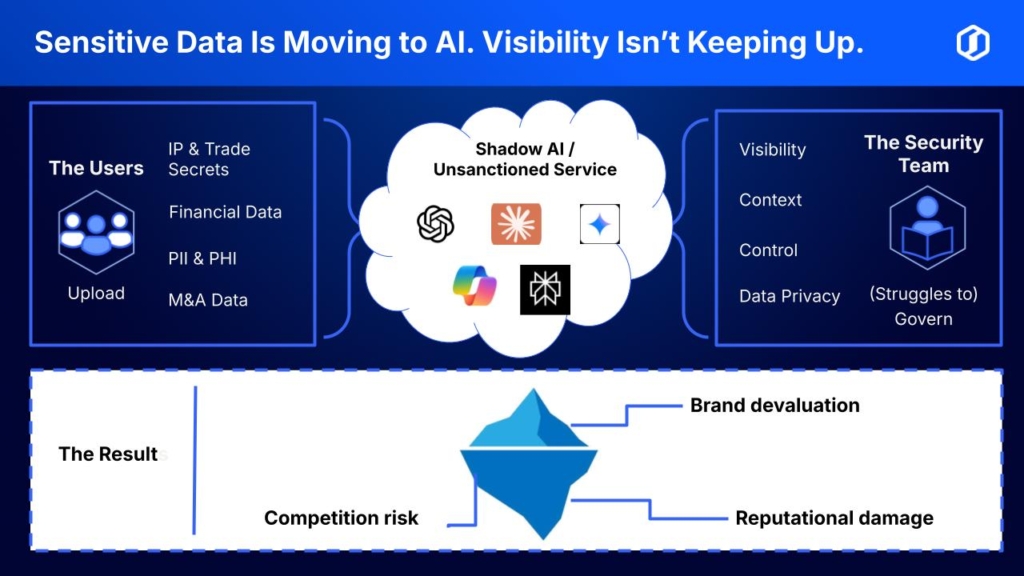
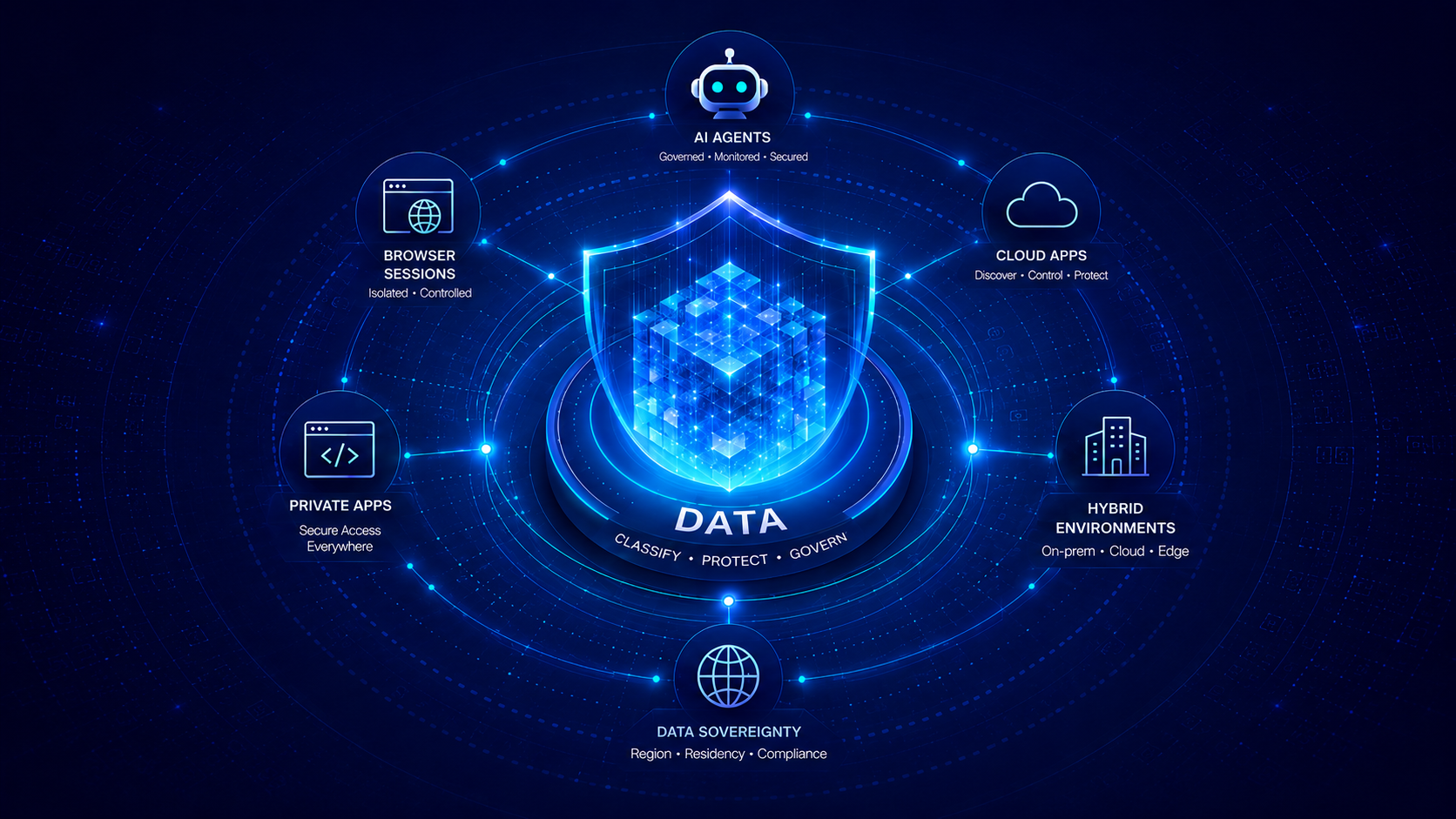
This is where Data Security Posture Management (DSPM) becomes indispensable. By continuously discovering, classifying, and monitoring sensitive data across environments – AI, cloud, SaaS, hybrid, and more, DSPM establishes the data context needed to identify exposure, correlate sensitive information with identity and access, prioritize risk, and govern data wherever it resides or moves.
DSPM therefore provides a data security foundation for secure AI adoption and compliance adherence – giving organizations the visibility and control needed to embrace AI, expand their technology stack, and modernize their environments without losing governance over their most sensitive information.
The Foundation of DSPM
DSPM is built on a data-first security model that continuously evaluates sensitive information in the context of identity, access, exposure, usage, and compliance. Rather than treating data as another asset to inventory, DSPM uses automated discovery, content-aware classification, entitlement analysis, and posture assessment to understand where sensitive data resides, who or what can access it, and how it may be exposed. Through context-aware risk analysis, DSPM correlates these signals to distinguish critical exposures from routine findings and prioritize remediation based on business impact. As AI becomes another consumer of enterprise data, DSPM provides the intelligence needed to establish guardrails around what AI applications can discover, retrieve, and consume.
Through an API-first integration model, DSPM complements IAM, DLP, SIEM, SOAR, and SSE investments, transforming data intelligence into prioritized remediation and policy enforcement. This creates a continuous operational cycle of discovery, classification, risk prioritization and remediation.
How Skyhigh DSPM Delivers Continuous Data Intelligence
Most enterprises are not constrained by a lack of security technologies, they are constrained by fragmented data intelligence.
Skyhigh DSPM addresses this challenge through an agentless, API-first architecture that continuously ingests metadata and relevant data context from cloud control planes, SaaS platforms, identity providers, and enterprise repositories. Without requiring endpoint agents or disrupting production workloads, the platform performs content-aware discovery, classification, entitlement analysis, and posture assessment across data stores.
Rather than assessing security findings in isolation, Skyhigh applies context-aware risk analysis by correlating data sensitivity with identity and access context, user activity, cloud configurations, sharing permissions, and regulatory requirements. This multidimensional view helps security teams understand the true risk and business impact of each exposure, distinguish critical issues from routine findings, and prioritize remediation where it matters most.
This context becomes particularly important for AI. as RAG systems, copilots, AI agents, and private AI applications retrieve enterprise information; excessive permissions or poorly governed data repositories can cause AI systems to retrieve more sensitive information than a user should be able to access. Skyhigh DSPM provides the data intelligence required to identify these exposures and establish guardrails around what sensitive data AI applications can discover, retrieve and consume.
Skyhigh extends this posture intelligence into enforcement through native integration with its Security Service Edge (SSE) platform. By combining DSPM intelligence with Cloud Access Security Broker (CASB), Secure Web Gateway (SWG), Zero Trust Network Access (ZTNA), and Data Loss Prevention (DLP), organizations can translate data risk context into adaptive, policy-driven controls across points of access.
This integrated architecture enables organizations to:
- Discover and classify sensitive data across cloud, SaaS, AI, shadow IT, and on-premises environments, where required.
- Correlate data sensitivity with identity entitlements, user behavior, device posture, and application risk.
- Identify excessive permissions, configuration drift, inappropriate sharing and policy violations.
- Establish data-aware guardrails for AI applications and AI-driven retrieval.
- Prioritize remediation using contextual risk scoring.
- Prevent unauthorized access and data exfiltration through adaptive DLP and least-privilege controls.
- Generate continuous audit evidence and support compliance reporting.
The result is a closed-loop security model that connects discovery, context, risk prioritization, governance, and enforcement into a single operational workflow.
Looking Ahead What’s Next?
As enterprise environments become increasingly data- and AI-driven, the future of enterprise security will depend not only on protecting infrastructure, but on how effectively organizations understand, govern, and secure their data wherever it resides, moves, or is consumed.
Skyhigh DSPM reflects this shift by providing the intelligence required to manage sensitive data across modern cloud, SaaS and AI ecosystems. When integrated with Security Service Edge technologies, that intelligence can transition into adaptive protection, helping organizations reduce data exposure, strengthen governance, secure AI adoption, simplify compliance and respond to evolving risks with greater precision.
The next question is not why Skyhigh DSPM matters, but how this approach translates into measurable security outcomes.
The following real-world use cases demonstrate how Skyhigh DSPM helps organizations reduce data risk, strengthen governance, secure AI-driven workflows, and simplify compliance across modern enterprise environments. To explore the architecture, capabilities, and implementation considerations in greater detail, download the accompanying eBook. If you’re interested in understanding how these capabilities apply to your own environment, request a personalized walkthrough with one of our experts.
Tentang Penulis

Megha Shukla
Manajer Pemasaran Produk Senior
Megha adalah seorang pemasar produk keamanan siber secara profesional dan penerjemah istilah teknis secara passion. Ia spesialis dalam menjembatani kesenjangan antara apa yang dibangun oleh insinyur dan apa yang sebenarnya peduli bagi pelanggan, tanpa membanjiri dengan istilah-istilah teknis yang berlebihan.
Dengan latar belakang yang mencakup pemasaran produk, pemasaran pelanggan, intelijen kompetitif, manajemen produk, pengembangan bisnis, strategi saluran, dan manajemen akun, dia telah mengemban berbagai peran yang ditawarkan oleh dunia keamanan siber dan TI (beberapa di antaranya secara bersamaan).
Apakah dia sedang meluncurkan produk baru, merumuskan strategi pemasaran, atau menulis posting blog yang mengungkap hal-hal yang tidak diungkapkan oleh orang lain, dia selalu membawa kejelasan, rasa ingin tahu, dan rasa hormat yang sehat terhadap apa yang dapat (dan seharusnya) diungkapkan secara terbuka.
Konten Terkait

Blog yang sedang tren
AI Is Changing Your Data Risk. DSPM Puts You Back in Control.
Megha Shukla September 4, 2026
Why Customers Love Mowgli: The IKEA Effect in Cybersecurity
Thyaga Vasudevan August 13, 2026
The Future of Security Starts with Data: Why Our Strategy Continues to Gain Momentum
Sanjay Castelino August 6, 2026
Product Updates Q2 2026: Simplified Security Across Web, Cloud, Data, and AI
Thyaga Vasudevan July 21, 2026