




DSPM for Multi-Cloud Data Security: Unified Visibility Across AWS, Azure, and GCP
- Multi-cloud data security requires a unified approach that goes beyond individual cloud provider boundaries.
- DSPM provides a data-centric layer for discovering, classifying, and prioritizing sensitive data risks across providers.
- Continuous visibility beats point-in-time assessments — cloud data exposure changes constantly.
- DSPM complements SSE, DLP, and CASB rather than replacing them.
- Successful DSPM programs combine discovery, classification, access-path analysis, and remediation workflows.
Why Multi-Cloud Changes the Data Security Problem
Cloud teams rarely operate in a single ecosystem. AWS is often used for its broad service depth and mature storage controls. Azure is common in Microsoft-centered enterprises. GCP is widely adopted for analytics, data engineering, and machine learning. Each cloud delivers flexibility, but each also brings a different security model.
AWS structures data access around multiple overlapping control layers, including S3 bucket policies, IAM policies, Access Control Lists, Access Points, and service control policies. Its data perimeter model requires organizations to define trusted identities, trusted resources, and expected network paths. Azure integrates storage security with role-based access control, storage account settings, anonymous access prevention, and private endpoint configurations. Microsoft's Zero Trust guidance for Azure storage emphasizes protecting data in all three states—at rest, in transit, and in use—while applying least-privilege access principles and continuous verification. Google Cloud implements storage security through Cloud IAM, organization policies, uniform bucket-level access controls, and public access prevention constraints. Google Cloud has also moved toward stronger secure-by-default organization policies, including controls that automatically prevent public access to storage buckets and enforce consistent permission models.
The same data protection requirement—preventing public access to sensitive files—requires different implementation approaches across platforms. That is why a cloud-by-cloud manual review process breaks down at scale.
What DSPM Adds
DSPM gives security teams a data-centric layer that answers four questions across the cloud estate:
Where is the data? What kind of data is it? How is it exposed? Who can reach it?
Effective DSPM solutions provide continuous inventory across these four critical dimensions of cloud data risk: location, sensitivity, exposure context, and access pathways.
Modern DSPM platforms can identify sensitive information across object storage, managed databases, data lake repositories, backup systems, virtual machine snapshots, and AI training datasets. Advanced classification engines identify PII, financial records, intellectual property, credentials, API keys, and regulated data types while adding business context. Exposure context includes public internet access, anonymous access permissions, overly broad IAM roles, legacy ACLs, cross-account sharing, and service principals with excessive privileges. Access pathway mapping identifies human users, service accounts, applications, and federated identities that can reach sensitive data through direct permissions, role inheritance, or privilege escalation paths.
MITRE ATT&CK documents cloud-relevant techniques involving permission abuse and elevated access, reinforcing why DSPM must evaluate access context as well as data location.
Why Continuous Visibility Matters
Point-in-time assessments are no longer enough. In multi-cloud environments, storage configurations, sharing settings, and identity relationships change constantly. A data set that is private on Monday can become public on Tuesday through a misconfiguration, a permissive policy change, or a new integration path.
Continuous discovery beats point-in-time assessments because it catches exposure as it emerges. Risk prioritization also reduces operational overhead by helping teams focus on the exposures that matter most. Instead of producing long lists of findings with the same severity, DSPM correlates data sensitivity with exposure severity so teams can remediate the highest-impact issues first.
This matters operationally as well as technically. Verizon's 2026 Data Breach Investigations Report found that vulnerability exploitation became the top breach entry point, accounting for 31% of breaches. If attackers are increasingly looking for weaknesses in exposed systems and misconfigurations, then visibility into data exposure becomes a practical defense, not just a reporting function.
IBM's Cost of a Data Breach Report 2025 reported a global average breach cost of USD 4.44 million, reinforcing the business case for stronger data visibility and controls across distributed environments.
How DSPM Supports Compliance and Governance
DSPM can strengthen compliance and governance by providing continuous visibility into regulated data handling across cloud platforms. It can generate reports showing where regulated data resides, who can access it, and how access controls align with compliance requirements.
That does not replace a broader compliance program, but it does reduce the manual burden of inventory, classification, and evidence gathering. The result is a more current view of data risk and a more practical way to support audits and internal governance reviews.
DSPM can help map discovered data to relevant regulatory and internal policy requirements. The core value is not the label itself; it is the combination of discovery, classification, and access analysis that makes governance decisions more reliable.
Building on Native Cloud Controls
DSPM works best when it can interpret the native controls each cloud provider already offers.
AWS emphasizes data perimeter controls and identity-based access boundaries. Its storage governance model relies on layered policy enforcement, where S3 Block Public Access serves as a foundational baseline for preventing accidental exposure. Azure's storage guidance aligns closely with Zero Trust principles, especially around least privilege, private connectivity, and the prevention of anonymous access. Google Cloud increasingly uses secure-by-default organization policies, uniform bucket-level access, and public access prevention to reduce common exposure patterns before they spread.
A strong DSPM program should understand those native guardrails, then evaluate whether actual configurations align with the intended security posture.
DSPM in the Broader Security Stack
DSPM is not meant to stand alone.
CNAPP focuses on workload security, vulnerability management, infrastructure misconfigurations, and runtime protection. DSPM focuses on data location, sensitivity, and access patterns. SSE protects data in motion through SWG, CASB, and ZTNA capabilities, while DSPM focuses on data at rest and exposure context in cloud infrastructure services. DLP excels at monitoring data movement and preventing unauthorized sharing, while DSPM provides inventory and risk context. CASB focuses on SaaS governance, user behavior analysis, and inline policy enforcement, while DSPM extends visibility into cloud infrastructure services.
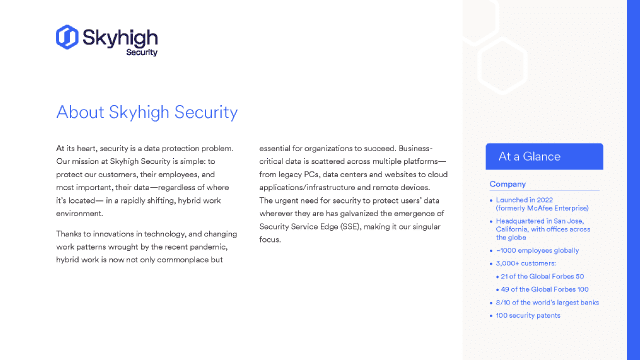
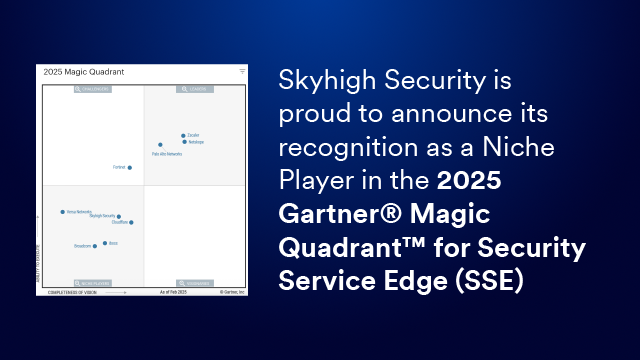
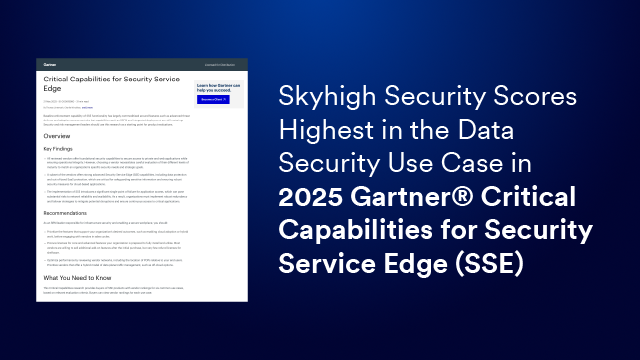
Because these tools solve different problems, they work best when integrated. Skyhigh Security's SSE platform combines SWG, CASB, ZTNA, DLP, RBI, and data security capabilities so organizations can apply consistent policies, correlate findings across security domains, and streamline remediation workflows. Skyhigh was recognized as a Niche Player in the 2025 Gartner Magic Quadrant for Security Service Edge and scored highest in the Data Security use case in the 2025 Gartner Critical Capabilities for SSE. DSPM findings should integrate with APIs, SIEM connectors, ticketing systems, and policy synchronization with SSE platforms.
What to Look For in a DSPM Program
A practical multi-cloud DSPM strategy should cover native service coverage, identity integration, network context, and cloud-native logging support across AWS, Azure, and GCP. It should also scale across multiple cloud accounts, subscriptions, and projects while maintaining acceptable performance and cost characteristics.
Multi-cloud DSPM should support native integration with services including Amazon S3, RDS, and Redshift; Azure Blob Storage, SQL Database, and Synapse; and Google Cloud Storage, Cloud SQL, and BigQuery. The solution should also account for cloud-specific data repositories and analytics services beyond core object storage and databases.
Advanced data classification should combine pattern matching, machine learning, context evaluation, and business metadata integration. Cross-platform access analysis should map identity and permission relationships across different cloud IAM systems to identify access paths and privilege escalation opportunities.
Automated remediation features can help teams address high-risk exposures, such as public access or overly permissive access controls, while preserving audit trails. The best outcomes usually come from pairing remediation guidance with review workflows and policy enforcement, not from chasing full automation before the environment is well understood.
A Practical Rollout Approach
Implementation should start with discovery, then expand to remediation. That sequence keeps the project manageable and helps teams show value early.
The initial phase should focus on inventorying sensitive data, identifying the highest-risk exposures, and mapping access paths across cloud environments. Once the team has a stable picture of the cloud data estate, it can move into policy alignment, workflow integration, and remediation planning.
Organizations often begin with discovery and risk prioritization before expanding to remediation and continuous monitoring.