




การจัดประเภทข้อมูลบนคลาวด์: รากฐานของการปกป้องข้อมูลที่มีความอ่อนไหวในองค์กรยุคใหม่
- ระบบการจัดประเภทจะระบุ จัดหมวดหมู่ และติดป้ายข้อมูลที่ละเอียดอ่อนในสภาพแวดล้อม SaaS การจัดเก็บข้อมูลบนคลาวด์ และสภาพแวดล้อมแบบไฮบริด
- การจัดประเภทด้วยมือไม่สามารถตามทันการขยายตัวอย่างรวดเร็วของข้อมูลบนคลาวด์ — การค้นพบข้อมูลแบบอัตโนมัติพร้อมการติดป้ายกำกับที่ขับเคลื่อนด้วย ML จึงเป็นสิ่งจำเป็น
- การจัดประเภทเป็นเงื่อนไขเบื้องต้นสำหรับการดำเนินการ DLP ที่มีประสิทธิภาพ การควบคุมการเข้าถึง การจำกัดการแบ่งปันข้อมูล และการรายงานความสอดคล้องกับข้อกำหนด
- ปัจจัยด้านมนุษย์มีบทบาทใน 62% ของกรณีการละเมิดข้อมูล (Verizon 2026 DBIR) ซึ่งยืนยันถึงความสำคัญของการจัดประเภทแบบอัตโนมัติ
- การจัดประเภทควรขยายไปสู่การจัดการท่าทางอย่างต่อเนื่อง โดยเชื่อมโยงการค้นพบกับการติดตามความเสี่ยงอย่างต่อเนื่อง
- ข้อมูลที่ไม่ได้รับการจัดการ, ระบบ IT ที่ไม่ได้รับการอนุมัติ (shadow IT) และเครื่องมือ AI ก่อให้เกิดความเสี่ยงด้านการกำกับดูแล ซึ่งการจัดประเภทข้อมูลช่วยเปิดเผยความเสี่ยงดังกล่าว (IBM Cost of a Breach 2025)
- การจัดประเภทที่มีประสิทธิภาพจะรวมการจับคู่รูปแบบ การจับคู่ข้อมูลอย่างแม่นยำ สัญญาณจากบริบท และระบบการจัดประเภทความไว
การจัดประเภทข้อมูลบนคลาวด์ได้พัฒนาจากขั้นตอนการตรวจสอบความสอดคล้องตามข้อกำหนด มาเป็นพื้นฐานการดำเนินงานด้านความปลอดภัยข้อมูลขององค์กร องค์กรอาจค้นพบข้อมูลที่ละเอียดอ่อนในสภาพแวดล้อมคลาวด์ต่าง ๆ แต่การจัดประเภทข้อมูลจะเปลี่ยนการค้นพบดังกล่าวให้กลายเป็นการป้องกันที่สามารถนำไปปฏิบัติได้จริง โดยการกำหนดความหมายและบริบทความละเอียดอ่อน ซึ่งช่วยขับเคลื่อนการบังคับใช้นโยบาย
การจัดประเภทข้อมูลบนคลาวด์คืออะไร?
การจัดประเภทข้อมูลบนคลาวด์ คือกระบวนการที่มีระบบในการค้นหา ระบุ และจัดประเภทข้อมูลที่ละเอียดอ่อนในสภาพแวดล้อมคลาวด์ต่าง ๆ เพื่อสนับสนุนนโยบายและมาตรการควบคุมความปลอดภัยที่สอดคล้องกัน
ต่างจากการค้นหาข้อมูลแบบทั่วไปที่เพียงบอกตำแหน่งที่ไฟล์อยู่ การจัดประเภทข้อมูลจะกำหนดว่าข้อมูลแต่ละชิ้นต้องการการป้องกันอย่างไร ซึ่งสิ่งนี้ถือเป็นพื้นฐานของกลยุทธ์การบริหารจัดการสถานะความปลอดภัยข้อมูลที่มีประสิทธิภาพ
กระบวนการนี้ประกอบด้วยสามชั้นที่แยกกันชัดเจน ขั้นตอนการค้นพบ (Discovery) จะค้นหาแหล่งเก็บข้อมูลและวัตถุข้อมูล ขั้นตอนการระบุ (Identification) จะตรวจสอบว่าเนื้อหาดังกล่าวมีองค์ประกอบที่ละเอียดอ่อนหรือไม่ ส่วนขั้นตอนการจัดประเภท (Classification) จะกำหนดความหมายและระดับความละเอียดอ่อน ซึ่งสามารถใช้เป็นแนวทางในการตัดสินใจเกี่ยวกับการเข้าถึง การแบ่งปัน การเก็บรักษา และการติดตามตรวจสอบ
ข้อมูลที่ละเอียดอ่อนมักแบ่งออกเป็นหลายประเภท ซึ่งแต่ละประเภทต้องการวิธีการจัดการที่แตกต่างกัน ข้อมูลส่วนบุคคลอาจอยู่ภายใต้การกำกับดูแลของกฎหมาย เช่น GDPR หรือ CCPA ส่วนบันทึกข้อมูลทางการแพทย์อาจอยู่ภายใต้ HIPAA ในขณะที่ข้อมูลบัตรชำระเงินต้องปฏิบัติตามข้อกำหนดของ PCI DSS นอกจากนี้ ทรัพย์สินทางปัญญา รหัสแหล่งข้อมูล ข้อมูลการรับรองสิทธิ์ บันทึกข้อมูลลูกค้า และเอกสารธุรกิจที่อยู่ภายใต้การกำกับดูแล ก็จำเป็นต้องได้รับการจัดการอย่างระมัดระวังเช่นกัน
ทำไมการจัดประเภทข้อมูลที่ละเอียดอ่อนจึงสำคัญในระบบคลาวด์
สถาปัตยกรรมคลาวด์เปลี่ยนแปลงหลักการด้านความปลอดภัยข้อมูลอย่างพื้นฐาน เนื่องจากข้อมูลเคลื่อนที่ข้ามขอบเขตที่ระบบควบคุมขอบเขตแบบดั้งเดิมไม่สามารถติดตามหรือปกป้องได้
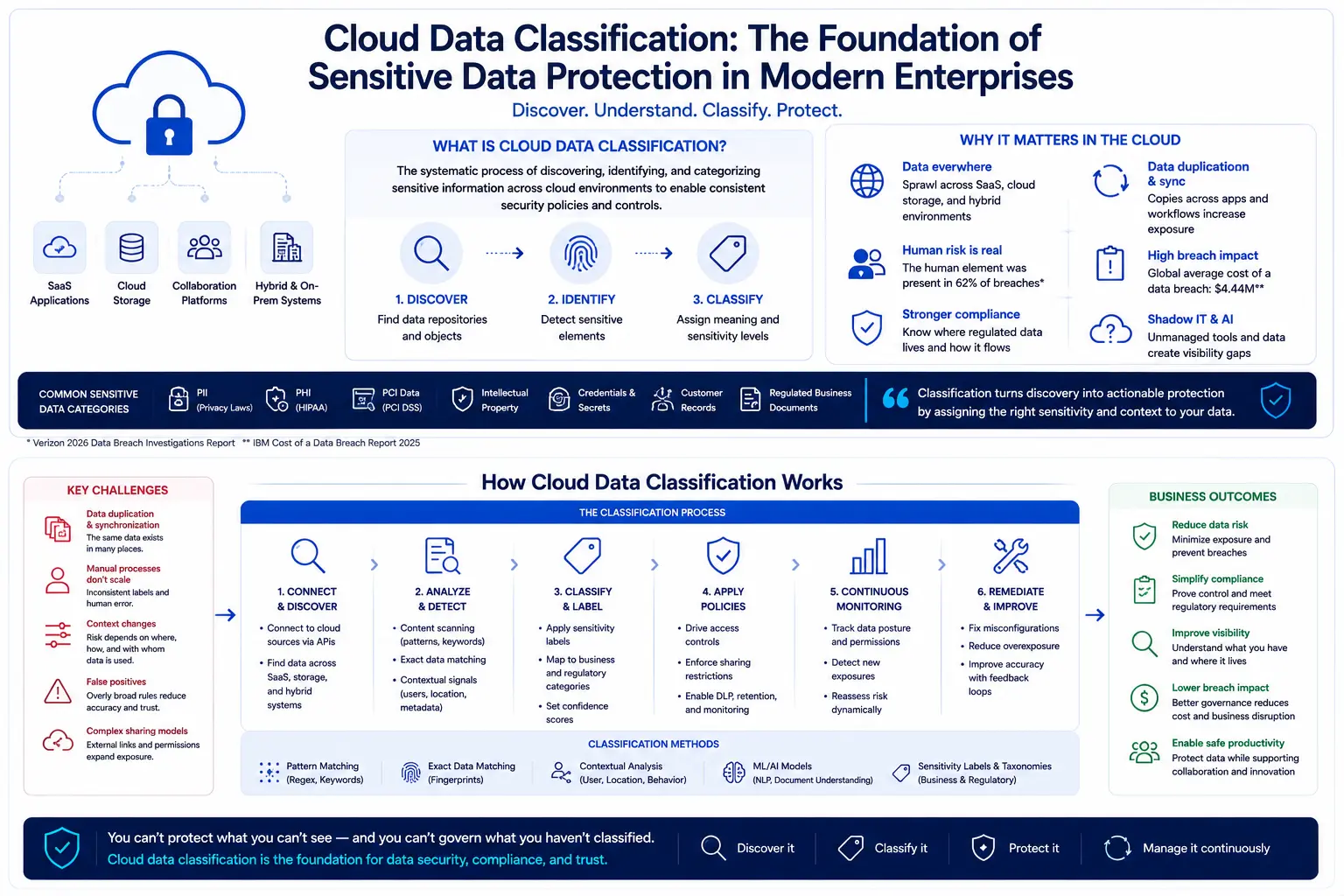
ตามรายงาน “Cost of a Data Breach Report 2025” ของ IBM ค่าใช้จ่ายเฉลี่ยทั่วโลกจากการรั่วไหลข้อมูลอยู่ที่ 4.44 ล้านดอลลาร์สหรัฐฯ ซึ่งทำให้การป้องกันและการตรวจพบตั้งแต่เนิ่นๆ กลายเป็นเรื่องสำคัญยิ่งกว่าที่เคย
ในสภาพแวดล้อมคลาวด์ ข้อมูลมักถูกคัดลอกและซิงโครไนซ์ระหว่างบริการและกระบวนการทำงานหลายแห่ง ซึ่งทำให้การติดตามด้วยมือเป็นเรื่องยาก แพลตฟอร์มการทำงานร่วมกันอาจทำให้การคัดลอกข้อมูลและการแบ่งปันข้อมูลระหว่างบริการเพิ่มขึ้น การบูรณาการ SaaS อาจทำให้การถ่ายโอนข้อมูลระหว่างระบบเกิดขึ้นในลักษณะที่ทำให้การมองเห็นข้อมูลและการกำกับดูแลกลายเป็นเรื่องซับซ้อน
ในสภาพแวดล้อมการทำงานแบบผ่านเบราว์เซอร์และแบบไฮบริด ข้อมูลที่ละเอียดอ่อนอาจถูกเข้าถึงผ่านอุปกรณ์ที่ไม่ได้รับการจัดการและเบราว์เซอร์ส่วนตัว ซึ่งทำให้การปกป้องข้อมูลมีความซับซ้อนมากขึ้น ตัวอย่างเช่น ข้อมูลที่เข้าถึงผ่านแอปพลิเคชันเว็บอาจถูกเปิดเผยผ่านการดาวน์โหลด การจัดเก็บข้อมูลในเครื่อง หรือการแบ่งปันข้อมูลเกินความจำเป็นในกระบวนการทำงานร่วมกัน
องค์กรต่าง ๆ มักประสบปัญหาในการผ่านการตรวจสอบการปฏิบัติตามกฎระเบียบ เมื่อไม่สามารถแสดงให้เห็นได้ว่าข้อมูลที่อยู่ภายใต้การกำกับดูแลนั้นเก็บอยู่ที่ใด หรือไหลเวียนระหว่างระบบต่าง ๆ อย่างไร การตอบสนองต่อเหตุการณ์จะช้าลงเมื่อทีมความปลอดภัยไม่สามารถระบุได้อย่างรวดเร็วว่าข้อมูลที่ละเอียดอ่อนใดอาจถูกละเมิดได้ ข้อกำหนดเกี่ยวกับการเก็บรักษาและลบข้อมูลจะกลายเป็นเรื่องที่ปฏิบัติไม่ได้ หากไม่ทราบว่าข้อมูลส่วนบุคคลนั้นอยู่ตรงใดในสภาพแวดล้อมคลาวด์
ระบบไอทีแบบเงา (Shadow IT) ทำให้สถานการณ์ยิ่งซับซ้อนขึ้น พนักงานใช้บริการและเครื่องมือบนคลาวด์ที่ฝ่ายไอทีไม่ได้จัดการหรือติดตาม ซึ่งเพิ่มความเสี่ยงต่อการเกิดข้อมูลเงาและการเปิดเผยข้อมูลที่ไม่ทราบ
ความท้าทายที่ใหญ่ที่สุดในการจัดประเภทข้อมูลบนคลาวด์
การคัดลอกข้อมูลและการซิงโครไนซ์เป็นปัจจัยที่ก่อให้เกิดความซับซ้อนอย่างทันทีทันใด ไฟล์เดียวอาจมีอยู่ในหลายแพลตฟอร์ม SaaS อาจถูกคัดลอกไปยังโฟลเดอร์ที่ใช้ร่วมกัน หรือถูกส่งออกสู่พื้นที่จัดเก็บข้อมูลในเครื่อง แต่ละสำเนาอาจต้องการการตัดสินใจด้านการป้องกันที่แตกต่างกัน ขึ้นอยู่กับบริบทและการใช้งานทางธุรกิจ
กระบวนการจัดประเภทแบบมือจะล้มเหลวอย่างรวดเร็วในสภาพแวดล้อมคลาวด์ หากไม่มีนโยบายมาตรฐาน การติดป้ายกำกับอาจไม่สอดคล้องกันระหว่างทีมและระบบต่าง ๆ ปริมาณข้อมูลในคลาวด์ที่เพิ่มขึ้นอย่างรวดเร็วนั้นเกินกว่าความสามารถในการจัดประเภทของมนุษย์
การเปลี่ยนแปลงบริบทก่อให้เกิดความท้าทายเพิ่มเติมในการจัดประเภท เอกสารเดียวกันอาจมีความเสี่ยงต่ำในระบบหนึ่ง แต่มีความเสี่ยงสูงหากถูกแชร์ไปยังภายนอก ซิงค์กับอุปกรณ์ที่ไม่ได้จัดการ หรือรวมกับข้อมูลที่ละเอียดอ่อนอื่น ๆ
ผลบวกปลอมทำให้ความแม่นยำในการจัดประเภทลดลงและส่งผลให้ผู้ใช้ไม่ยอมรับระบบ การจับคู่รูปแบบที่กว้างเกินไปอาจทำให้คำหรือรูปแบบทั่วไปที่ปรากฏทั้งในบริบทที่ละเอียดอ่อนและไม่ละเอียดอ่อนถูกทำเครื่องหมายผิด อัตราผลบวกปลอมที่สูงอาจทำให้ความเชื่อมั่นในผลการจัดประเภทลดลง และทำให้การบังคับใช้นโยบายยากที่จะรักษาไว้ได้
แบบจำลองการแบ่งปันข้อมูลที่ออกแบบมาสำหรับระบบคลาวด์เพิ่มความซับซ้อน ซึ่งวิธีการจัดประเภทแบบดั้งเดิมไม่ได้ถูกออกแบบมาเพื่อจัดการกับสิ่งนี้
วิธีการทำงานของระบบการจัดประเภทข้อมูลบนคลาวด์
การจัดประเภทข้อมูลบนคลาวด์ที่มีประสิทธิภาพมักใช้วิธีการตรวจจับหลายวิธีร่วมกัน เพื่อขยายขอบเขตการตรวจจับและลดความพึ่งพาการตรวจสอบด้วยมือ
- การจับคู่รูปแบบเป็นวิธีการที่นิยมใช้ในการระบุข้อมูลที่มีโครงสร้าง เช่น หมายเลขประกันสังคมหรือหมายเลขบัตรชำระเงิน วิธีนี้ทำงานได้ดีกับประเภทข้อมูลที่อยู่ภายใต้การกำกับดูแลและมีรูปแบบที่สม่ำเสมอ แต่อาจก่อให้เกิดผลบวกปลอมได้เมื่อรูปแบบเดียวกันปรากฏในเนื้อหาที่ไม่มีความอ่อนไหว
- การจับคู่ข้อมูลแบบแม่นยำใช้ลายนิ้วมือดิจิทัลของชุดข้อมูลที่รู้ว่าเป็นข้อมูลสำคัญ เพื่อระบุการจับคู่ที่ตรงกันหรือใกล้เคียงกัน วิธีนี้มักใช้กับชุดข้อมูลที่รู้ว่ามีมูลค่าสูง และอาจจำเป็นต้องมีการอัปเดตเมื่อข้อมูลอ้างอิงมีการเปลี่ยนแปลง
- การจำแนกตามบริบทวิเคราะห์สัญญาณหลายประเภทที่ไปไกลกว่าเพียงรูปแบบเนื้อหา สัญญาณเหล่านี้อาจรวมถึงตำแหน่งที่ตั้ง ผู้เป็นเจ้าของ สิทธิ์การเข้าถึง ระดับความเสี่ยงของแอปพลิเคชัน และพฤติกรรมของผู้ใช้
- ระบบการจัดประเภทสมัยใหม่บางระบบใช้การเรียนรู้ของเครื่องเพื่อวิเคราะห์โครงสร้างเอกสาร ภาษา และความสัมพันธ์ระหว่างเนื้อหา โดยเฉพาะอย่างยิ่งสำหรับข้อมูลที่ไม่มีโครงสร้าง
- ป้ายความไวต่อข้อมูล (Sensitivity labels) ให้การจัดประเภทตามนโยบาย ซึ่งเชื่อมโยงความต้องการทางธุรกิจกับมาตรการควบคุมทางเทคนิค ป้ายความไวต่อข้อมูลสามารถช่วยองค์กรนำนโยบายไปใช้ได้อย่างสม่ำเสมอมากขึ้นในบริการและกระบวนการทำงานที่ได้รับการสนับสนุน
- องค์กรต่าง ๆ ยังสามารถใช้พจนานุกรมที่กำหนดไว้ล่วงหน้าเกี่ยวกับคำหรือแนวคิดที่ละเอียดอ่อน เพื่อเสริมวิธีการตรวจจับอื่น ๆ ได้อีกด้วย
ระบบการจัดประเภทข้อมูลบนคลาวด์ที่มีประสิทธิภาพสูงสุดคือระบบที่รวมวิธีการต่าง ๆ เข้าด้วยกันผ่านนโยบายที่เป็นหนึ่งเดียว
หลังจากที่คุณจัดประเภทข้อมูลที่ละเอียดอ่อนแล้ว จะเกิดอะไรขึ้น?
การจัดประเภทจะมีประโยชน์ก็ต่อเมื่อองค์กรนำมันมาเชื่อมโยงกับมาตรการป้องกันที่สามารถนำไปปฏิบัติได้จริง และการจัดการความเสี่ยงอย่างต่อเนื่อง
โปรแกรมความปลอดภัยข้อมูลสมัยใหม่ใช้ข้อมูลเชิงลึกจากการจัดประเภทเพื่อขับเคลื่อนการบังคับใช้นโยบาย การควบคุมการเข้าถึง การจำกัดการแบ่งปันข้อมูล และการตรวจสอบอย่างต่อเนื่องในสภาพแวดล้อมคลาวด์security service edge ชั้นนำได้ผสานการจัดประเภทข้อมูลเข้ากับกระบวนการบังคับใช้นโยบายโดยตรง
- Data loss prevention ใช้บริบทความละเอียดอ่อนเพื่อนำมาตรการควบคุมที่เหมาะสมยิ่งขึ้นมาใช้
- ระบบควบคุมการเข้าถึงใช้การจัดประเภทระดับความไวต่อการเข้าถึงเพื่อบังคับใช้หลักการสิทธิขั้นต่ำในแอปพลิเคชันบนคลาวด์
- การจัดประเภทสามารถช่วยสนับสนุนการตัดสินใจเกี่ยวกับการเข้าถึงที่คำนึงถึงความเสี่ยงได้มากขึ้น โดยการเพิ่มบริบทเกี่ยวกับระดับความไวของข้อมูลเข้าไปในระบบควบคุมที่อิงตามตัวตน
- ระบบควบคุมการแบ่งปันและการทำงานร่วมกันจะจำกัดการแบ่งปันข้อมูลที่ได้รับการจัดประเภทไปยังฝ่ายภายนอกโดยอัตโนมัติ หรือกำหนดให้ต้องได้รับการอนุมัติเพิ่มเติมก่อนการเผยแพร่
- การติดตามและรายงานการปฏิบัติตามกฎระเบียบขึ้นอยู่กับการจัดประเภท เพื่อแสดงให้เห็นถึงการ ปฏิบัติตามกฎระเบียบและสนับสนุนข้อกำหนดในการตรวจสอบ
- การบริหารจัดการสถานะความปลอดภัยของข้อมูล ขยายขอบเขตการจัดประเภทข้อมูลไปสู่การประเมินความเสี่ยงและการแก้ไขปัญหาอย่างต่อเนื่อง
- โซลูชัน DSPM ใช้ข้อมูลเชิงลึกจากการจัดประเภทเพื่อระบุการตั้งค่าที่ผิดพลาด สิทธิ์การเข้าถึงที่ไม่เหมาะสม และการละเมิดนโยบาย
- กระบวนการตอบสนองต่อเหตุการณ์ใช้ข้อมูลเมตาข้อมูลการจัดประเภทเพื่อกำหนดลำดับความสำคัญของการสอบสวนและกำหนดข้อกำหนดในการแจ้งเตือน
- นโยบายการเก็บรักษาและลบข้อมูลใช้กฎเกณฑ์ที่แตกต่างกันตามระดับความละเอียดอ่อนของข้อมูลและข้อกำหนดทางกฎหมาย
แนวทางปฏิบัติที่ดีที่สุดในการจัดประเภทข้อมูลบนคลาวด์
โครงการจัดประเภทข้อมูลบนคลาวด์ที่ประสบความสำเร็จจำเป็นต้องมีวิธีการอย่างเป็นระบบ ซึ่งสามารถสร้างสมดุลระหว่างความแม่นยำ ความสามารถในการขยายตัว และการยอมรับจากผู้ใช้ องค์กรควรเริ่มต้นด้วยการจัดทำบัญชีและค้นหาข้อมูล ก่อนที่จะพยายามจัดประเภทข้อมูลที่ละเอียดอ่อน หากไม่มีความเข้าใจที่ชัดเจนว่าข้อมูลนั้นอยู่ที่ใด ใครเป็นเจ้าของ ใช้งานอย่างไร และเคลื่อนย้ายไปยังที่ใด การจัดประเภทข้อมูลอาจไม่สอดคล้องกันหรือไม่ครบถ้วน
แทนที่จะพยายามจัดประเภทข้อมูลทั้งหมดในครั้งเดียว ทีมควรกำหนดลำดับความสำคัญในการจัดประเภทข้อมูล โดยพิจารณาจากผลกระทบต่อธุรกิจ ความเสี่ยงด้านกฎระเบียบ และความละเอียดอ่อนของข้อมูลที่เกี่ยวข้อง สิ่งนี้ช่วยให้องค์กรสามารถมุ่งเน้นไปที่ข้อมูลที่ก่อให้เกิดความเสี่ยงสูงสุดก่อน เช่น ข้อมูลที่อยู่ภายใต้การกำกับดูแล ทรัพย์สินทางปัญญา ข้อมูลลูกค้า ข้อมูลทางการเงิน และสินทรัพย์ที่มีมูลค่าสูงอื่น ๆ
การอัตโนมัติเป็นปัจจัยสำคัญในการขยายการจำแนกประเภทข้อมูลในสภาพแวดล้อมคลาวด์ แต่ไม่ควรกำจัดความกำกับดูแลของมนุษย์ออกไปอย่างสิ้นเชิง เครื่องมือการค้นพบและการจำแนกประเภทแบบอัตโนมัติสามารถลดภาระงานที่ต้องทำด้วยมือ ปรับปรุงความสม่ำเสมอ และระบุข้อมูลที่ละเอียดอ่อนในเนื้อหาที่มีโครงสร้างและไม่มีโครงสร้างในปริมาณมาก อย่างไรก็ตาม ทีมด้านความปลอดภัย ความเป็นส่วนตัว การกำกับดูแล และกฎหมายควรยังคงมีบทบาทในการกำหนดนโยบาย ตรวจสอบกรณีพิเศษ และรับรองว่ากฎการจำแนกประเภทสะท้อนถึงความต้องการทางธุรกิจ
องค์กรควรจัดให้ระบบการจัดประเภทข้อมูลสอดคล้องกันระหว่างผู้เกี่ยวข้องด้านการกำกับดูแล ความเป็นส่วนตัว และความปลอดภัย หากทีมต่าง ๆ ใช้ป้ายกำกับ คำนิยาม หรือข้อกำหนดการจัดการที่แตกต่างกัน ข้อมูลที่ละเอียดอ่อนอาจได้รับการจัดการอย่างไม่สม่ำเสมอในแอปพลิเคชันและกระบวนการทำงานต่าง ๆ ระบบการจัดประเภทข้อมูลที่ใช้ร่วมกันจะช่วยให้มั่นใจได้ว่าป้ายกำกับการจัดประเภทนั้นเข้าใจได้ สามารถบังคับใช้ได้ และเชื่อมโยงกับนโยบายการคุ้มครองที่เหมาะสม
การจัดประเภทข้อมูลบนคลาวด์ควรถูกมองว่าเป็นกระบวนการที่ดำเนินไปอย่างต่อเนื่อง ไม่ใช่โครงการที่ทำเพียงครั้งเดียว ข้อมูลเปลี่ยนแปลงอยู่ตลอดเวลาเมื่อผู้ใช้สร้าง คัดลอก แบ่งปัน ย้าย และแก้ไขไฟล์ผ่านแอปพลิเคชัน SaaS พื้นที่จัดเก็บข้อมูลบนคลาวด์ อุปกรณ์ปลายทาง และเครื่องมือการทำงานร่วมกัน การสแกนซ้ำอย่างสม่ำเสมอ การอัปเดตนโยบาย และการประเมินใหม่อย่างต่อเนื่อง จะช่วยรักษาความแม่นยำในการจัดประเภทข้อมูลไว้ได้ แม้บริบทของข้อมูลจะเปลี่ยนแปลงไปก็ตาม
นโยบายการจัดประเภทควรผสานเข้ากับขั้นตอนการทำงานของผู้ใช้และกระบวนการทางธุรกิจที่มีอยู่ได้อย่างเป็นธรรมชาติ หากการจัดประเภทก่อให้เกิดความยุ่งยากมากเกินไป ผู้ใช้อาจหลีกเลี่ยง ไม่ปฏิบัติตาม หรือใช้ป้ายกำกับอย่างไม่สม่ำเสมอ โปรแกรมที่มีประสิทธิภาพจะเชื่อมโยงการจัดประเภทเข้ากับวิธีการทำงานที่มีอยู่ของพนักงาน พร้อมทั้งนำกฎการป้องกันมาใช้ในเบื้องหลังเมื่อเป็นไปได้
สุดท้ายนี้ องค์กรควรออกแบบนโยบายการจัดประเภทข้อมูลโดยคำนึงถึงการบังคับใช้ตั้งแต่ต้น การจัดประเภทข้อมูลจะมีประโยชน์สูงสุดเมื่อมันช่วยกำหนดการควบคุมการเข้าถึงdata loss prevention ข้อจำกัดในการแบ่งปันข้อมูล นโยบายการเก็บรักษาข้อมูล การตอบสนองต่อเหตุการณ์ และกระบวนการทำงานด้านความปลอดภัยข้อมูลโดยรวม เป้าหมายไม่ใช่เพียงการติดป้ายกำกับข้อมูล แต่เพื่อใช้การจัดประเภทข้อมูลเป็นพื้นฐานสำหรับการคุ้มครองข้อมูลที่แข็งแกร่งและสม่ำเสมอมากขึ้น
จากการจัดประเภทสู่การป้องกันอย่างต่อเนื่อง
การจัดประเภทข้อมูลบนคลาวด์เป็นพื้นฐานสำคัญของโปรแกรมความปลอดภัยข้อมูลที่ครบถ้วน โดยการระบุข้อมูลที่ละเอียดอ่อนและนำบริบทที่มีความหมายมาประยุกต์ใช้กับข้อมูลดังกล่าว องค์กรสามารถตัดสินใจได้อย่างมีข้อมูลมากขึ้นเกี่ยวกับวิธีการเข้าถึง การแบ่งปัน การติดตาม การเก็บรักษา และการปกป้องข้อมูล
แพลตฟอร์มความปลอดภัยข้อมูลสมัยใหม่ขยายขอบเขตการจัดประเภทให้เกินกว่าการติดป้ายแบบคงที่ โดยรวมมันเข้ากับการประเมินสถานะความปลอดภัยอย่างต่อเนื่องและการวิเคราะห์ความเสี่ยง สิ่งนี้ช่วยให้ทีมความปลอดภัยสามารถระบุปัญหาที่นโยบายแบบดั้งเดิมอาจมองข้ามได้ เช่น สิทธิ์การเข้าถึงที่มากเกินไป การตั้งค่าการแบ่งปันข้อมูลที่มีความเสี่ยง การเคลื่อนย้ายข้อมูลที่ไม่ได้รับการจัดการ หรือข้อมูลที่ละเอียดอ่อนที่ถูกเปิดเผยในสถานที่ที่ไม่คาดคิด
ในสถาปัตยกรรมความปลอดภัยบนคลาวด์ที่กว้างขึ้น ข้อมูลเมตาดาต้าเกี่ยวกับการจัดประเภทสามารถช่วยในการตัดสินใจเกี่ยวกับนโยบายเมื่อข้อมูลถูกส่งผ่านระหว่างแอปพลิเคชัน ผู้ใช้ อุปกรณ์ และช่องทางเข้าถึง เมื่อองค์กรเข้าใจระดับความไวต่อข้อมูลที่เกี่ยวข้อง พวกเขาสามารถใช้มาตรการควบคุมที่แม่นยำยิ่งขึ้น แทนที่จะพึ่งพาการตัดสินใจแบบกว้างๆ เช่น อนุญาตหรือบล็อกเท่านั้น
ปัญญาประดิษฐ์และการเรียนรู้ของเครื่องอาจช่วยปรับปรุงกระบวนการจัดประเภทได้เช่นกัน โดยเฉพาะอย่างยิ่งสำหรับข้อมูลที่ไม่มีโครงสร้าง เช่น เอกสาร การนำเสนอ ข้อความ และเนื้อหาการทำงานร่วมกัน เทคโนโลยีเหล่านี้สามารถช่วยในการระบุรูปแบบ การวิเคราะห์บริบท และการตรวจสอบในปริมาณมาก แม้ว่าประสิทธิภาพของเทคโนโลยีเหล่านี้จะขึ้นอยู่กับคุณภาพการนำไปใช้ การฝึกอบรม การตรวจสอบความถูกต้อง และการออกแบบนโยบาย
วิธีการจัดประเภทและป้องกันแบบรวมเป็นหนึ่งสามารถช่วยองค์กรนำมาตรการควบคุมมาใช้ได้อย่างสม่ำเสมอมากขึ้นในแอปพลิเคชันบนคลาวด์ การจราจรบนเว็บ จุดปลายทาง และกระบวนการทำงานร่วมกัน เมื่อการใช้งานคลาวด์ขยายตัวขึ้นและข้อกำหนดทางกฎหมายยังคงมีมาตรฐานสูง การจัดประเภทจึงกลายเป็นวิธีสำคัญในการปรับปรุงการบริหารจัดการความเสี่ยง ความสม่ำเสมอในการดำเนินงาน และการตัดสินใจด้านความปลอดภัย
การจัดประเภทข้อมูลบนคลาวด์ไม่ใช่เพียงการปฏิบัติตามข้อกำหนดอีกต่อไป แต่เป็นพื้นฐานสำคัญสำหรับการระบุข้อมูลที่ละเอียดอ่อน การนำมาตรการควบคุมที่เหมาะสมมาใช้ และการรักษาความปลอดภัยอย่างต่อเนื่องในสภาพแวดล้อมคลาวด์ขององค์กรสมัยใหม่
พร้อมที่จะเสริมความแข็งแกร่งให้กับกลยุทธ์การปกป้องข้อมูลของคุณแล้วหรือยัง? มาค้นพบกันว่าแพลตฟอร์มความปลอดภัยบนคลาวด์ที่ครบวงจรของSkyhigh Securityสามารถช่วยคุณนำระบบการจัดประเภทและการปกป้องข้อมูลที่มีประสิทธิภาพไปใช้ในสภาพแวดล้อมคลาวด์ของคุณได้อย่างไร ติดต่อทีมงานของเราวันนี้เพื่อเรียนรู้เพิ่มเติมเกี่ยวกับโซลูชันความปลอดภัยที่เน้นข้อมูลเป็นศูนย์กลางของเรา