




การแยกระบบเบราว์เซอร์สำหรับอุตสาหกรรมที่อยู่ภายใต้การกำกับดูแล: ภาคการดูแลสุขภาพ ภาคการเงิน และภาครัฐบาล
- การแยกระบบเบราว์เซอร์ช่วยกำจัดข้อมูลท้องถิ่นที่เหลืออยู่ โดยการแสดงเนื้อหาเว็บจากระยะไกล ทำให้ข้อมูลสุขภาพส่วนบุคคล (PHI) ข้อมูลผู้ถือบัตร หรือข้อมูลที่จำเป็นต้องรักษาความลับ (CUI) ไม่เหลืออยู่ในระบบ
- การปรับปรุงกฎความปลอดภัย HIPAA ที่เสนอมาทำให้มาตรการป้องกันทางเทคนิคกลายเป็นข้อบังคับ ไม่ใช่ข้อที่สามารถเลือกปฏิบัติได้
- PCI DSS 4.0 ปัจจุบันกำหนดให้มีการควบคุมสคริปต์ที่ทำงานในเบราว์เซอร์ของผู้ใช้
- NIST SP 800 171 Rev 3 ระบุอย่างชัดเจนว่า การแยกส่วนเป็นแนวทางทางสถาปัตยกรรมสำหรับการคุ้มครองข้อมูลที่มีความสำคัญต่อความมั่นคง (CUI)
- โครงการ CBII ของกระทรวงกลาโหม (DoD) ได้ยืนยันประสิทธิภาพของการแยกเบราว์เซอร์ในระดับรัฐบาลกลาง
- การวิเคราะห์ความสอดคล้องกับกฎระเบียบไม่ใช่กิจกรรมที่ทำเพียงครั้งเดียว แต่กรอบกฎระเบียบแต่ละชุดจำเป็นต้องมีการติดตามตรวจสอบอย่างต่อเนื่อง การบันทึกผลการตรวจสอบ และ...
- เริ่มจากสถานการณ์การใช้งานเบราว์เซอร์ที่มีความเสี่ยงสูงที่สุดก่อน ไม่ใช่การนำระบบไปใช้แบบทั่วทั้งองค์กร
องค์กรที่อยู่ภายใต้การกำกับดูแลต้องเผชิญกับปัญหาความปลอดภัยของเบราว์เซอร์ในรูปแบบเฉพาะ: ผู้ใช้จำเป็นต้องเข้าถึงเว็บเพื่อปฏิบัติงาน แต่ทุกเซสชันเบราว์เซอร์ที่ไม่ได้รับการควบคุมจะสร้างช่องทางที่อาจทำให้ข้อมูลที่อยู่ภายใต้การกำกับดูแลรั่วไหล หรือทำให้ภัยคุกคามเข้าถึงระบบที่ประมวลผลข้อมูลดังกล่าวได้ การแยกเบราว์เซอร์ (Browser Isolation) แก้ไขปัญหานี้โดยการรันเนื้อหาเว็บในสภาพแวดล้อมบนคลาวด์ ทำให้โค้ดที่เป็นอันตราย ข้อมูลที่เก็บไว้ในแคช หรือข้อมูลเหลือจากเซสชัน ไม่เคยสัมผัสกับอุปกรณ์ปลายทางเลย สำหรับทีมในภาคการดูแลสุขภาพ การเงิน และรัฐบาล คำถามไม่ใช่ว่าการแยกส่วนจะเพิ่มมูลค่าด้านความปลอดภัยหรือไม่ — แต่เป็นวิธีการนำไปใช้ให้สอดคล้องกับข้อกำหนดของ HIPAA, PCI DSS, NIST SP 800 171 และ FedRAMP อย่างชัดเจน พร้อมทั้งรักษาขั้นตอนการทำงานทางคลินิก การซื้อขาย และภารกิจหลักไว้
คู่มือนี้จะอธิบายถึงเงื่อนไขเบื้องต้น ขั้นตอนการดำเนินการตามระยะ การกำหนดความสอดคล้องกับข้อกำหนด จุดการบูรณาการ ตัวชี้วัดความสำเร็จ และข้อผิดพลาดที่พบบ่อยในการนำระบบการแยกเบราว์เซอร์ไปใช้ในทั้งสามสภาพแวดล้อมทางกฎระเบียบ
เงื่อนไขเบื้องต้น: สิ่งที่ควรเตรียมไว้ก่อนการติดตั้ง
ก่อนที่จะนำระบบแยกเบราว์เซอร์มาใช้ในสภาพแวดล้อมที่อยู่ภายใต้การกำกับดูแล ต้องมีสามคุณสมบัติพื้นฐานที่ทำงานได้ — หากไม่เช่นนั้น ระบบแยกเบราว์เซอร์จะกลายเป็นชั้นระบบที่มีค่าใช้จ่ายสูง ซึ่งผู้ตรวจสอบไม่สามารถเชื่อมโยงกับมาตรการควบคุมได้
การจัดประเภทและทำบัญชีข้อมูล คุณไม่สามารถแยกส่วนข้อมูลที่ยังไม่ได้รับการจัดประเภทได้ โรงพยาบาลที่นำระบบแยกส่วนมาใช้บนสถานีงานพยาบาลที่ใช้ร่วมกัน ต้องทราบว่ากระบวนการทำงานใดเกี่ยวข้องกับข้อมูลสุขภาพอิเล็กทรอนิกส์ที่ได้รับการคุ้มครอง (ePHI) (เช่น การเข้าถึงพอร์ทัลผู้ป่วย การตรวจสอบผลการตรวจห้องปฏิบัติการ) และกระบวนการใดเป็นงานบริหาร (เช่น การตรวจสอบตารางเวร) ฝ่ายซื้อขายของธนาคารจำเป็นต้องกำหนดขอบเขตของสภาพแวดล้อมข้อมูลผู้ถือบัตรก่อนที่นโยบายการแยกส่วนจะสามารถแยกแยะระหว่างการท่องเว็บเพื่อวิจัยกับการเข้าถึงหน้าชำระเงินได้ หากยังไม่ได้ดำเนินการจัดทำบัญชีรายการข้อมูลให้ครบถ้วน การแยกส่วนเบราว์เซอร์จะก่อให้เกิดช่องโหว่ในนโยบายที่ผู้ตรวจสอบจะค้นพบ
การบูรณาการระบบการจัดการอัตลักษณ์และการเข้าถึง นโยบายการแยกส่วนในเบราว์เซอร์ต้องถูกทริกเกอร์ตามอัตลักษณ์ของผู้ใช้ อุปกรณ์ที่ผู้ใช้กำลังใช้งาน และสิ่งที่ผู้ใช้กำลังเข้าถึง ซึ่งหมายความว่า IdP บริการไดเรกทอรี และการตรวจสอบสถานะอุปกรณ์ของคุณต้องส่งข้อมูลเข้าสู่ระบบเครื่องยนต์นโยบายการแยกส่วน พิจารณาตัวอย่างนักวิเคราะห์ผู้รับจ้างของรัฐบาลที่เข้าถึงทั้งแหล่งข้อมูล OSINT ที่อยู่ใกล้กับข้อมูล CUI และเอกสารภายในที่ไม่เป็นอันตรายภายในช่วงเวลาทำงานเดียวกัน — การแยกส่วนต้องถูกนำไปใช้อย่างเลือกสรรตามโปรไฟล์ความเสี่ยงของจุดหมายปลายทาง ไม่ใช่ใช้แบบครอบคลุมทุกเซสชัน แบบจำลองความพร้อมZero Trustของ CISA เวอร์ชัน 2.0 (2023) แนะนำให้บังคับใช้การแยกส่วนโดยอัตโนมัติสำหรับเซสชันที่มีสิทธิ์พิเศษ เซสชันที่ไม่ได้รับการจัดการ หรือเซสชันที่มีความเสี่ยงสูง ในขั้นความพร้อม "ที่เหมาะสมที่สุด" โดยเน้นย้ำว่าการแยกส่วนที่คำนึงถึงตัวตนคือสถานะเป้าหมาย
เอกสารการปฏิบัติตามข้อกำหนดที่มีอยู่ ก่อนที่จะดำเนินการแยกส่วนใดก็ตาม ให้จัดทำแผนความปลอดภัยระบบ (SSP) การวิเคราะห์ความเสี่ยง หรือเอกสารกำหนดขอบเขต PCI DSS ที่มีอยู่ให้ชัดเจน NIST SP 800 171 Rev 3 (2024) ระบุว่า ข้อกำหนดด้านความปลอดภัยมีผลบังคับใช้กับส่วนประกอบของระบบที่ไม่ใช่ของรัฐบาลกลาง ซึ่งดำเนินการประมวลผล เก็บรักษา หรือส่งข้อมูล CUI การเพิ่มการแยกเบราว์เซอร์จะเปลี่ยนแปลงขอบเขตของคุณ — หากคุณไม่อัปเดต SSP หรือเอกสารขอบเขต คุณจะสร้างช่องว่างในการปฏิบัติตามข้อกำหนดแทนที่จะปิดช่องว่างที่มีอยู่
ขั้นตอนที่ 1: การวิเคราะห์ความสอดคล้อง — ข้อกำหนดที่แต่ละกรอบงานกำหนดไว้จริง ๆ
ขั้นตอนการดำเนินการขั้นแรกคือการปรับให้สอดคล้องกับกฎระเบียบ แต่ละกรอบงานมีมาตรการควบคุมเฉพาะที่การแยกเบราว์เซอร์ช่วยสร้างหลักฐานที่สามารถตรวจสอบได้
กฎความปลอดภัยตาม HIPAA
ร่างกฎความปลอดภัย HIPAA (NPRM) ที่เสนอ (HHS, ธันวาคม 2024) กำหนดให้องค์กรที่อยู่ภายใต้การกำกับดูแลต้องจัดตั้งและนำมาตรการควบคุมทางเทคนิคมาใช้ เพื่อกำหนดค่าระบบข้อมูลอิเล็กทรอนิกส์ที่เกี่ยวข้อง รวมถึงสถานีทำงาน ให้เป็นไปตามมาตรฐานที่สอดคล้องกัน นอกจากนี้ ยังกำหนดให้ต้องเข้ารหัสข้อมูลสุขภาพส่วนบุคคลอิเล็กทรอนิกส์ (ePHI) ทั้งในสถานะที่เก็บไว้และระหว่างการส่งข้อมูล โดยมีข้อยกเว้นในบางกรณีเท่านั้น
การแยกเบราว์เซอร์สนับสนุนมาตรการป้องกันทางเทคนิคของ HIPAA หลายประการโดยตรง มาตรฐานการควบคุมการเข้าถึง (§164.312(a)) กำหนดให้มีนโยบายทางเทคนิคที่จำกัดการเข้าถึง ePHI ให้เฉพาะบุคคลที่ได้รับอนุญาตเท่านั้น เมื่อแพทย์หรือบุคลากรทางการแพทย์ที่ทำงานที่สถานีงานห้องฉุกเฉินที่ใช้ร่วมกัน เข้าถึงพอร์ทัลผู้ป่วยผ่านเซสชันเบราว์เซอร์ที่แยกไว้ เซสชันดังกล่าวจะสิ้นสุดลงเมื่อแท็บถูกปิด — ไม่มีข้อมูล PHI ที่เหลืออยู่ในแคชท้องถิ่น คุกกี้ หรือโฟลเดอร์ดาวน์โหลด ซึ่งผู้ใช้ถัดไปอาจค้นพบได้ มาตรฐานความปลอดภัยในการส่งข้อมูล (§164.312(e)) กำหนดให้ต้องปกป้อง ePHI ระหว่างการส่งข้อมูล; การแยกส่วนช่วยให้มั่นใจว่าคำสั่งการแสดงผล (ไม่ใช่ข้อมูลดิบ) จะถูกส่งไปยังจุดปลายทาง
การเปลี่ยนแปลงที่ใหญ่ที่สุดในกฎที่เสนอคือ การยกเลิกความแตกต่างระหว่างมาตรการป้องกันที่ "จำเป็น" และ "สามารถดำเนินการได้" ซึ่งทำให้ข้อกำหนดการดำเนินการทั้งหมดกลายเป็นข้อบังคับ โดยมีข้อยกเว้นเพียงเล็กน้อย องค์กรด้านการดูแลสุขภาพที่ก่อนหน้านี้บันทึกมาตรการควบคุมสถานีทำงานว่าเป็น "สามารถดำเนินการได้" และเลือกไม่ดำเนินการตามนั้น จะต้องแก้ไขช่องว่างดังกล่าว ขนาดของปัญหานี้ใหญ่โตอย่างน่าตกใจ: ตามรายงานการรั่วไหลข้อมูลด้านการดูแลสุขภาพปี 2025 ของ HIPAA Journal มีรายงานการรั่วไหลข้อมูลด้านการดูแลสุขภาพขนาดใหญ่ 742 กรณีที่ส่งถึง OCR ในปี 2024 ซึ่งทำให้ข้อมูลส่วนตัวของบุคคล 289 ล้านคนถูกเปิดเผย
PCI DSS 4.0
PCI DSS v4.0.1 เป็นมาตรฐานความปลอดภัยสำหรับบัตรชำระเงินที่ใช้งานอยู่ในปัจจุบัน และตั้งแต่วันที่ 31 มีนาคม 2568 ข้อกำหนดทั้ง 51 ข้อที่มีกำหนดวันบังคับใช้ในอนาคตจะกลายเป็นข้อบังคับทั้งหมด (PCI Security Standards Council, 2567) โดยมีข้อกำหนดสองข้อที่เน้นเรื่องการแยกเบราว์เซอร์
ข้อกำหนด 6.4.3 กำหนดว่า สคริปต์ใดก็ตามที่ถูกโหลดหรือดำเนินการในเบราว์เซอร์ของผู้บริโภคบนหน้าชำระเงิน ต้องได้รับการบันทึกในรายการ อนุมัติ และตรวจสอบความสมบูรณ์ สำหรับสถาบันการเงินที่ดำเนินการธุรกรรมแบบไม่ใช้บัตร (card not present) สิ่งนี้หมายความว่า สคริปต์ที่ทำงานในเบราว์เซอร์ของลูกค้าจะอยู่ในขอบเขตการตรวจสอบแล้ว การแยกเบราว์เซอร์ (Browser isolation) สามารถสร้างสภาพแวดล้อมแบบแซนด์บ็อกซ์ (sandbox) สำหรับเซสชันเหล่านี้ได้ ซึ่งรับประกันว่า แม้จะมีสคริปต์ที่เป็นอันตรายถูกแทรกเข้ามา ก็จะถูกดำเนินการในสภาพแวดล้อมที่แยกไว้ และจะไม่เข้าถึงสภาพแวดล้อมข้อมูลผู้ถือบัตรได้
ข้อกำหนด 11.6.1 กำหนดให้มีกลไกเพื่อตรวจจับการเปลี่ยนแปลงที่ไม่ได้รับอนุญาตในสคริปต์ของหน้าชำระเงิน เมื่อผู้ค้าในบริษัทโบรกเกอร์เข้าชมเว็บไซต์วิเคราะห์หุ้นของฝ่ายที่สามบนเครื่องคอมพิวเตอร์เดียวกันที่ใช้เข้าถึงระบบซื้อขายภายใน การดาวน์โหลดแบบ drive-by download อาจทำให้จุดปลายทางถูกบุกรุกและถูกใช้เป็นจุดเชื่อมต่อเพื่อเข้าถึง CDE การแยกการเข้าชมเว็บไซต์ภายนอกทั้งหมดจะช่วยรับประกันว่าส่วนเครือข่ายของระบบซื้อขายจะไม่ได้รับเนื้อหาเว็บที่ยังไม่ผ่านการตรวจสอบ
NIST SP 800-171 Rev 3 (การคุ้มครองข้อมูลที่มีความสำคัญทางความมั่นคง)
NIST SP 800 171 Rev 3 (2024) ระบุว่า องค์กรที่ไม่ใช่หน่วยงานของรัฐบาลกลางอาจจำกัดขอบเขตของข้อกำหนดด้านความปลอดภัยสำหรับข้อมูลที่มีความสำคัญต่อความมั่นคง (CUI) โดยการแยกส่วนประกอบของระบบการประมวลผล CUI ไว้ในโดเมนความปลอดภัยที่แยกต่างหาก ซึ่งสามารถทำได้ผ่าน "แนวคิดด้านสถาปัตยกรรมและการออกแบบ" รวมถึงเครือข่ายย่อย อุปกรณ์ป้องกันขอบเขต และกลไกควบคุมการไหลของข้อมูล
การแยกเบราว์เซอร์เป็นตัวอย่างการนำไปใช้ตามแนวทางนี้อย่างชัดเจน วิศวกรของบริษัทผู้รับจ้างด้านการป้องกันประเทศ ซึ่งจำเป็นต้องเข้าถึงข้อมูลข่าวกรองจากแหล่งเปิด (open source intelligence) บนเว็บไซต์ที่โฮสต์ในต่างประเทศ ขณะทำงานในโครงการที่มีข้อมูล CUI ที่ถูกจัดประเภท สามารถดำเนินการดังกล่าวได้ผ่านเซสชันเบราว์เซอร์ที่แยกออกมา โดยรักษาขอบเขตของข้อมูล CUI ให้คงอยู่ ไม่ให้เนื้อหาเว็บ สคริปต์ หรือคุกกี้จากเว็บไซต์ที่อาจมีเจตนาร้ายสัมผัสกับส่วนประกอบของระบบภายในขอบเขตของข้อมูล CUI ได้เลย
เฟดแรม
FedRAMP ใช้มาตรฐานพื้นฐาน NIST SP 800 53 และกำหนดให้ผู้ให้บริการคลาวด์ต้องผ่านการประเมินความปลอดภัยอย่างอิสระที่ดำเนินการโดยองค์กรประเมินฝ่ายที่สาม (3PAO) ตามเอกสารการปฏิบัติตามข้อกำหนดของ AWS (2025) บัญชี FedRAMP Moderate คิดเป็นประมาณ 80% ของบริการคลาวด์ทั้งหมดที่ได้รับการอนุมัติจาก FedRAMP
ทุกโซลูชันการแยกเบราว์เซอร์ที่นำไปใช้ในสภาพแวดล้อมของรัฐบาลกลาง ต้องได้รับการรับรองจาก FedRAMP ในระดับผลกระทบที่เหมาะสม ข้อนี้ไม่สามารถเจรจาได้ — การใช้บริการแยกเบราว์เซอร์ที่ไม่ได้รับการรับรองในหน่วยงานรัฐบาลกลางจะถือเป็นการละเมิดข้อกำหนด ไม่ใช่การลดความเสี่ยง กระทรวงกลาโหม (DoD) ได้ตรวจสอบความถูกต้องของโมเดลนี้ใน scale แล้ว: โปรแกรม Cloud Based Internet Isolation (CBII) ของ DISA ได้รับการออกแบบมาเพื่อรองรับผู้ใช้ NIPRNet ของ DoD จำนวน 3.4 ถึง 3.6 ล้านคน โดยจัดการเซสชันการท่องเว็บเชิงพาณิชย์ที่ไม่จำเป็นต่อภารกิจ (กองทัพบกสหรัฐฯ, 2021) ตามข้อมูลจากสำนักงานข้อกำหนดและวิเคราะห์ (Requirements and Analysis Office) ของ DISA โครงการนี้คาดว่าจะช่วยกระทรวงกลาโหมประหยัดเงินได้มากกว่า 300 ล้านดอลลาร์ โดยไม่จำเป็นต้องอัปเกรดเครื่องมือความปลอดภัยทางไซเบอร์ที่ป้องกันจุดเข้าถึงอินเทอร์เน็ตอย่างต่อเนื่อง
ขั้นตอนที่ 2: การออกแบบสถาปัตยกรรมและการบูรณาการ
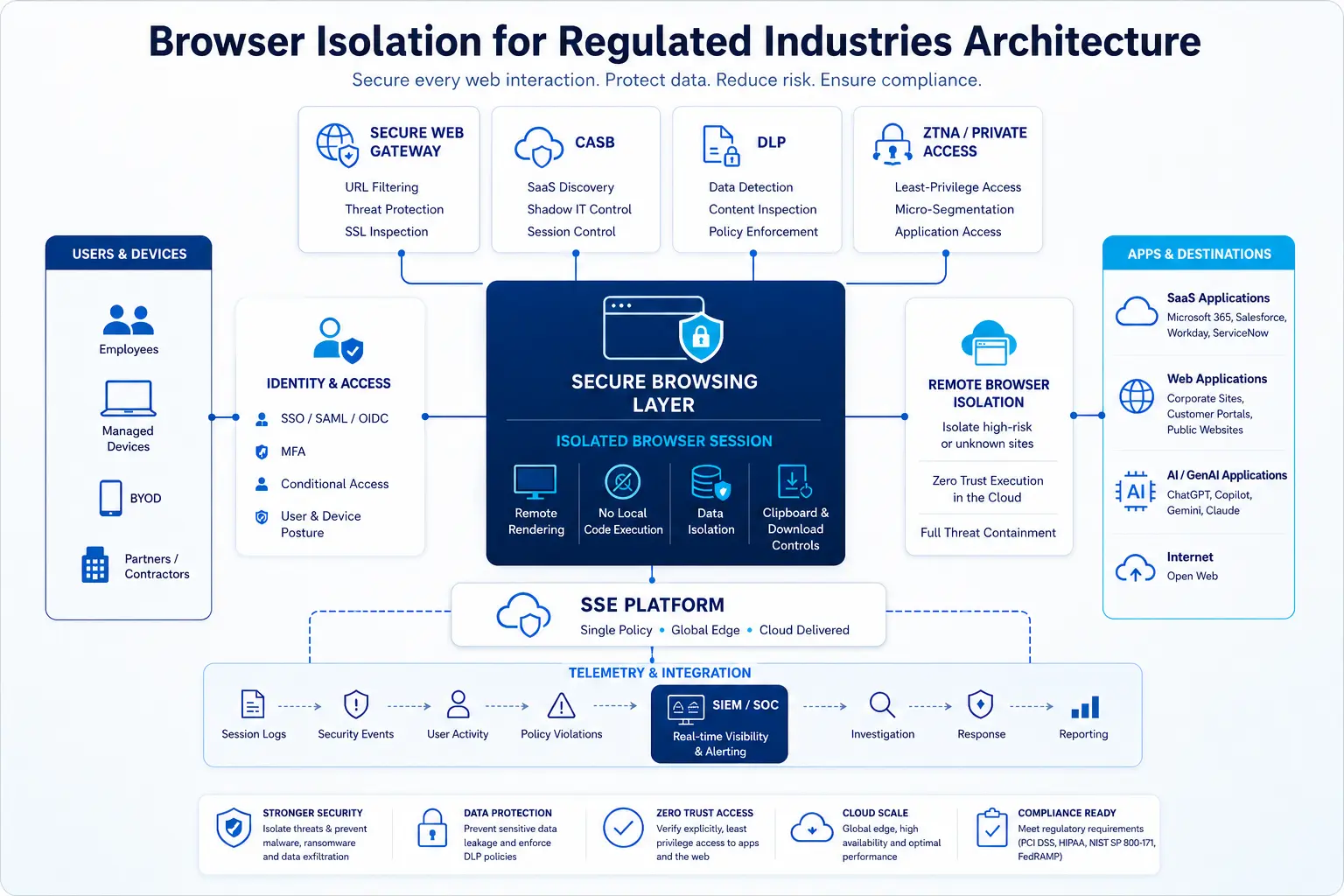
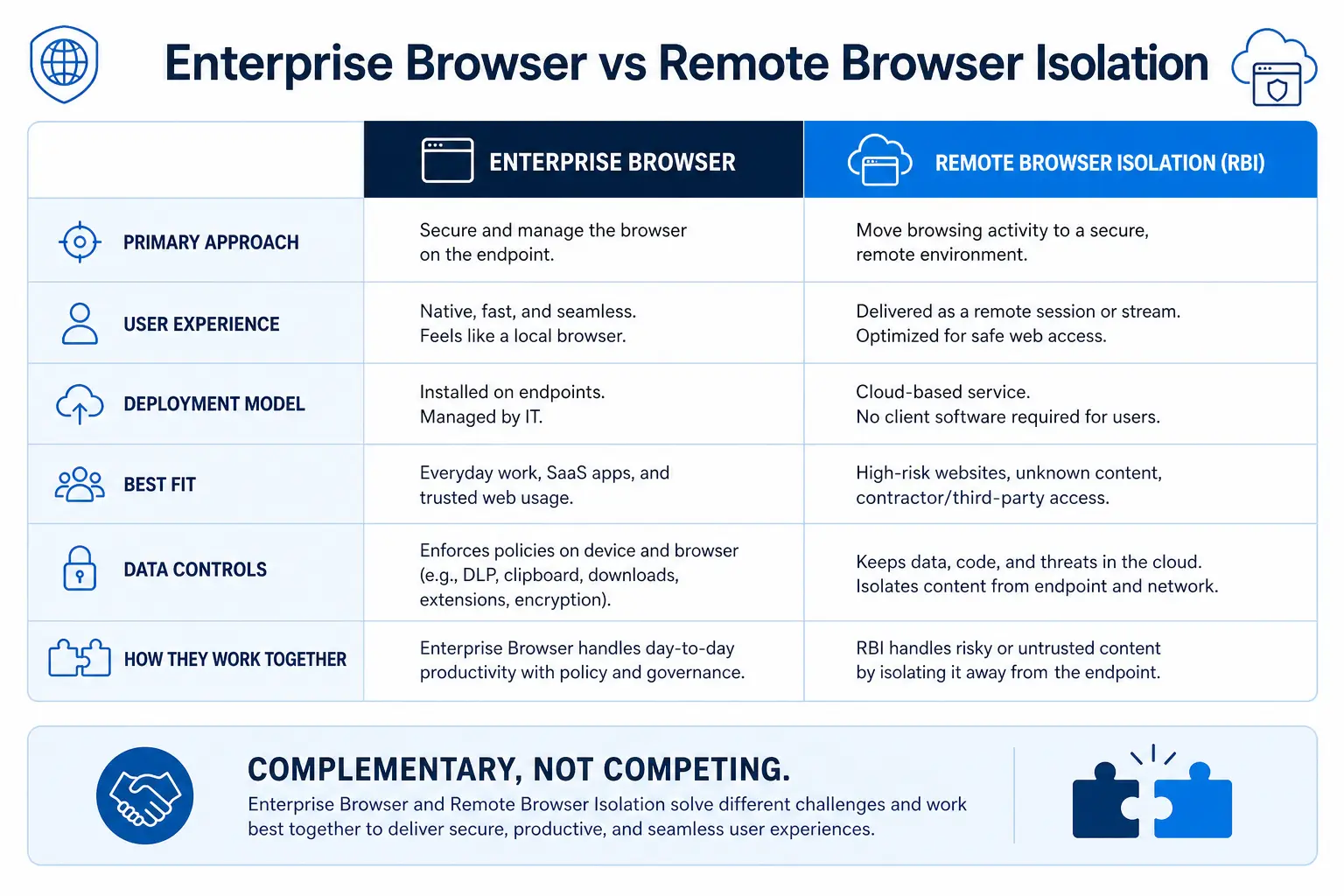
เมื่อการวิเคราะห์ความสอดคล้องเสร็จสิ้นแล้ว ขั้นตอนต่อไปคือการออกแบบวิธีการที่ระบบแยกเบราว์เซอร์จะผสานเข้ากับระบบความปลอดภัยที่มีอยู่ของคุณ การแยกเบราว์เซอร์ไม่ทำงานอย่างแยกตัว — มันต้องผสานกับ secure web gateway , เครื่องมือDLP, ระบบควบคุม CASB, ผู้ให้บริการระบุตัวตน และโครงสร้างพื้นฐาน SIEM
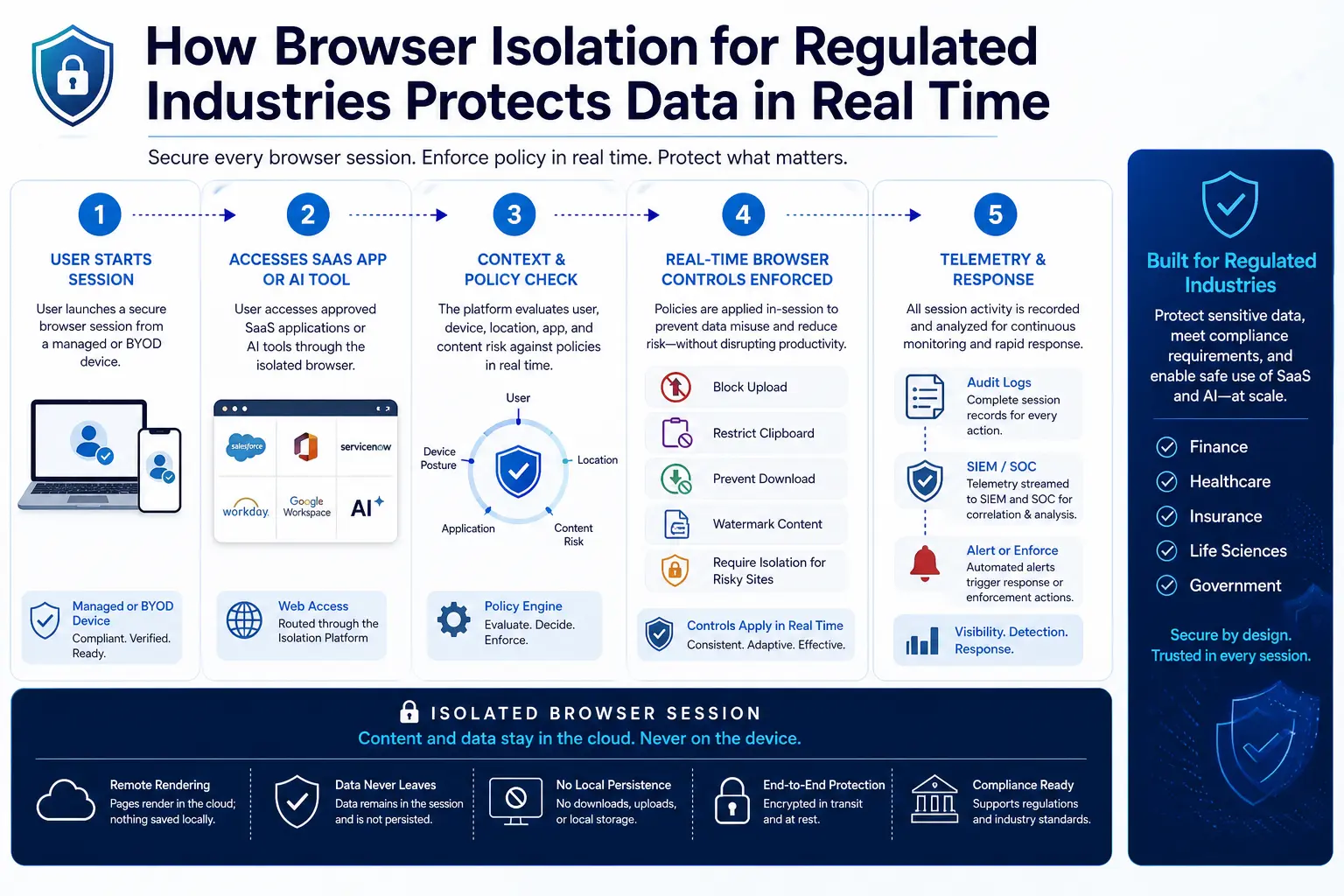
สถานการณ์ในระบบการดูแลสุขภาพ — สถานีทำงานทางคลินิกที่ใช้ร่วมกัน โรงพยาบาลที่มีสถานีทำงาน 2,000 แห่งที่ใช้ระบบล็อกอินร่วมกันในสถานีพยาบาลและห้องทำงานของแพทย์ จะส่งการรับส่งข้อมูลเว็บจากภายนอกทั้งหมดผ่านระบบแยกเบราว์เซอร์ที่รวมอยู่ใน SWG การเข้าถึงระบบบันทึกสุขภาพอิเล็กทรอนิกส์ (EHR) ภายในระบบจะข้ามผ่านชั้นการแยก (เนื่องจากอยู่ภายในขอบเขตความเชื่อถือแล้ว) แต่เว็บไซต์ภายนอกใด ๆ — เช่น ฐานข้อมูลอ้างอิงของบริษัทยา, พอร์ทัลประกันสุขภาพ, หรือแพลตฟอร์มการศึกษาต่อเนื่อง — จะถูกโหลดในเซสชันที่แยกไว้ นโยบาย DLP จะตรวจสอบเนื้อหาในชั้นการแยกก่อนที่จะอนุญาตให้ดาวน์โหลดได้ โดยบล็อกการพยายามส่งออกรายชื่อผู้ป่วยไปยังอีเมลส่วนตัวหรือพื้นที่เก็บข้อมูลบนคลาวด์ การบันทึกเซสชันจะถูกส่งไปยัง SIEM เพื่อตอบสนองข้อกำหนดของ HIPAA เกี่ยวกับบันทึกการตรวจสอบ
สถานการณ์ด้านการเงิน — ห้องซื้อขายและสาขาธนาคาร บริษัทโบรกเกอร์ระดับกลางได้แยกการท่องเว็บจากแหล่งภายนอกทั้งหมดที่ไม่ได้อยู่ในรายชื่ออนุญาต (whitelist) บนเครื่องคอมพิวเตอร์ในห้องซื้อขาย นโยบาย SWG อนุญาตให้เข้าถึงโดยตรงไปยังเทอร์มินัลข้อมูลทางการเงินที่ได้รับการอนุมัติและแอปพลิเคชันภายใน แต่เว็บไซต์วิจัยภายนอก สื่อข่าว หรือหน้าเว็บที่สนับสนุนด้วยโฆษณาจะแสดงผลในสภาพแวดล้อมที่ถูกแยกออก การควบคุมคลิปบอร์ดป้องกันการคัดลอกและวางข้อมูลจากเซสชันที่ถูกแยกออกไปยังเดสก์ท็อปท้องถิ่น ซึ่งช่วยตอบสนองข้อกำหนดการแบ่งส่วนเครือข่ายของ PCI DSS พร้อมทั้งให้นักเทรดสามารถใช้เครื่องมือวิจัยที่จำเป็นได้ สำหรับสาขาที่ดำเนินการชำระเงินด้วยบัตร การแยกแอปพลิเคชันการประมวลผลการชำระเงินช่วยป้องกันไม่ให้การโจมตีแบบฉีดสคริปต์สไตล์ Magecart แพร่กระจายออกไป
สถานการณ์ของรัฐบาล — การวิเคราะห์ OSINT บนเครือข่ายที่ไม่เป็นความลับ นักวิเคราะห์ข่าวกรองเข้าถึงแหล่งข้อมูล OSINT ที่โฮสต์ในต่างประเทศ — เว็บไซต์ข่าว แพลตฟอร์มสื่อสังคมออนไลน์ และบริการแบ่งปันเอกสาร — ผ่านเซสชันเบราว์เซอร์ที่แยกตัวบนเครือข่าย NIPRNet ชั้นการแยกตัวจะกำจัดเนื้อหาที่สามารถดำเนินการได้, บล็อกการดาวน์โหลดไฟล์เว้นแต่จะผ่านการสแกนมัลแวร์, และป้องกันไม่ให้ผู้วิเคราะห์นำ JavaScript ที่เป็นอันตรายเข้าสู่สภาพแวดล้อมการประมวลผล CUI โดยไม่ตั้งใจ เนื่องจากข้อมูลประจำตัวของผู้วิเคราะห์และข้อมูลเมตาของเซสชันถูกส่งไปยัง SIEM ทุกการเข้าถึงจึงถูกบันทึกและสามารถตรวจสอบได้เพื่อวัตถุประสงค์การประเมินตามมาตรฐาน NIST 800 171
ขั้นตอนที่ 3: การกำหนดนโยบายและการนำนโยบายไปใช้
การนำระบบไปใช้อย่างมีประสิทธิภาพนั้นต้องดำเนินการตามแนวทางแบ่งระดับความเสี่ยง ไม่ใช่การนำระบบไปใช้แบบทั้งหมดหรือไม่มีเลย
ระดับ 1 — เซสชันที่มีความเสี่ยงสูงและส่งผลกระทบต่อความสอดคล้องกับกฎระเบียบอย่างมาก ให้ใช้การแยกระบบเป็นอันดับแรกสำหรับสถานการณ์ที่อาจก่อให้เกิดผลทางกฎระเบียบรุนแรงที่สุดหากเกิดการละเมิดความปลอดภัย ได้แก่: สถานีงานคลินิกที่ใช้ร่วมกันและเข้าถึงพอร์ทัลผู้ป่วย, เซสชันหน้าชำระเงินใน CDE, และสถานีงานของนักวิเคราะห์ที่เข้าถึงเว็บไซต์ภายนอกที่ยังไม่ถูกจัดประเภท กลุ่มผู้ใช้เหล่านี้มีจำนวนน้อย แต่มีความเสี่ยงด้านความสอดคล้องกับกฎระเบียบที่สูงมาก
ระดับ 2 — การท่องเว็บภายนอกของพนักงานในวงกว้าง ขยายการแยกส่วนไปยังการเข้าถึงเว็บภายนอกทั่วไปสำหรับผู้ใช้ทุกคนในส่วนที่ได้รับการควบคุม นี่คือจุดที่การบูรณาการกับแพลตฟอร์ม SSE ให้ประโยชน์ — เครื่องยนต์นโยบายเดียวสามารถกำหนดเส้นทางทราฟฟิกผ่านการแยกส่วน SWG หรือการเข้าถึงโดยตรง ตามประเภท URL คะแนนความเสี่ยงของผู้ใช้ และสถานะของอุปกรณ์ รายงาน DBIR ปี 2025 ของ Verizon ยืนยันว่าเรื่องนี้สำคัญเพียงใด: 88% ของการโจมตีแอปพลิเคชันเว็บขั้นพื้นฐานเกี่ยวข้องกับข้อมูลรับรองที่ถูกขโมย และข้อมูลรับรองเหล่านั้นจำนวนมากมีต้นกำเนิดจากมัลแวร์ขโมยข้อมูล (infostealer) ที่ถูกส่งผ่านช่องทางโจมตีที่อิงกับเบราว์เซอร์
ระดับ 3 — การเข้าถึงของอุปกรณ์ที่ไม่ได้รับการจัดการและผู้รับจ้าง ผู้รับจ้าง พนักงานที่เดินทางบ่อย และผู้ใช้ BYOD ที่เข้าถึงแอปพลิเคชันที่อยู่ภายใต้การกำกับดูแลจากอุปกรณ์ส่วนตัว ถือเป็นปัญหาการควบคุมการเข้าถึงที่ยากที่สุด การแยกเบราว์เซอร์ (Browser isolation) ที่ส่งผ่านพร็อกซีแบบย้อนกลับ (reverse proxy) หรือสถาปัตยกรรมแบบไม่มีไคลเอนต์ (clientless architecture) ช่วยให้ผู้ใช้เหล่านี้สามารถโต้ตอบกับแอปพลิเคชันได้โดยไม่มีการเก็บข้อมูลใดๆ ไว้บนอุปกรณ์ปลายทางที่ไม่ได้จัดการ ซึ่งสิ่งนี้มีความสำคัญเป็นพิเศษในภาคการดูแลสุขภาพ ที่พยาบาลที่เดินทางไปทำงานต่างจังหวัดเข้าถึงระบบบันทึกสุขภาพอิเล็กทรอนิกส์ (EHR) จากแท็บเล็ตที่ใช้ร่วมกันซึ่งโรงพยาบาลจัดให้ และในภาครัฐ ที่ผู้รับจ้างเข้าถึงระบบที่อยู่ใกล้เคียงกับข้อมูลที่ควบคุม (CUI) จากแล็ปท็อปส่วนตัว
Skyhigh Securityremote browser isolation ผสานการทำงานกับ SWG, CASB และ DLP เป็นส่วนหนึ่งของแพลตฟอร์ม SSE แบบรวมศูนย์ — ทำให้ทั้งสามชั้นสามารถใช้เครื่องยนต์นโยบายและบันทึกการตรวจสอบเดียวกันได้
การวัดความสำเร็จ: ตัวชี้วัดที่สำคัญต่อผู้ตรวจสอบบัญชี
การนำระบบแยกเบราว์เซอร์มาใช้โดยไม่มีผลลัพธ์ที่วัดได้ถือเป็นการลงทุนด้านความปลอดภัยที่ไม่มีหลักฐาน — และผู้ตรวจสอบต้องการหลักฐาน
การลดปริมาณข้อมูลที่เหลืออยู่ในจุดปลายทาง ก่อนการแยกระบบ ให้ดำเนินการสแกนพื้นฐานบนเครื่องทำงานที่อยู่ภายใต้การกำกับดูแล เพื่อค้นหาแคชของเบราว์เซอร์ที่มีข้อมูลที่ละเอียดอ่อน — PHI ในภาคการดูแลสุขภาพ, CHD ในภาคการเงิน, และตัวบ่งชี้ CUI ในภาครัฐบาล หลังจากดำเนินการแยกระบบแล้ว ให้สแกนใหม่และวัดระดับการลดลง เป้าหมายคือไม่มีข้อมูลที่อยู่ภายใต้การกำกับดูแลเหลืออยู่ในไฟล์แคชของเบราว์เซอร์ในเซสชันที่แยกระบบ
ความครบถ้วนของบันทึกการตรวจสอบ ทุกเซสชันที่ถูกแยกออกควรสร้างบันทึกที่บันทึกข้อมูลเกี่ยวกับตัวตนของผู้ใช้ URL ปลายทาง ระยะเวลาของเซสชัน การดำเนินการถ่ายโอนข้อมูล (การอัปโหลด การดาวน์โหลด การคัดลอกไปยังคลิปบอร์ด การพิมพ์) และการดำเนินการตามนโยบายที่ดำเนินการ (การบล็อก การอนุญาต การแยกออก) กำหนดให้สนามบันทึกเหล่านี้สอดคล้องกับข้อกำหนดทางกฎหมายเฉพาะ — มาตรการควบคุมการตรวจสอบของ HIPAA (§164.312(b)), ข้อกำหนดที่ 10 ของ PCI DSS (บันทึกและติดตาม), และมาตรการควบคุมในชุด AU ของ NIST 800 171
การลดจำนวนเหตุการณ์จากเวกเตอร์ที่แพร่กระจายผ่านเว็บ ติดตามเหตุการณ์มัลแวร์ การคลิกที่นำไปสู่การถูกฟิชชิ่ง และเหตุการณ์ดาวน์โหลดแบบ drive-by ก่อนและหลังการนำระบบแยกส่วนมาใช้ รายงาน DBIR ปี 2025 ของ Verizon พบว่า การมีส่วนร่วมของฝ่ายที่สามเพิ่มขึ้นถึง 30% ของการละเมิดข้อมูลทั้งหมด ซึ่งเพิ่มขึ้นเป็นสองเท่าจากปีก่อน ระบบแยกส่วนช่วยลดพื้นที่ความเสี่ยงนี้โดยตรง โดยการป้องกันไม่ให้เนื้อหาเว็บจากฝ่ายที่สามทำงานบนอุปกรณ์ปลายทางในเครือข่ายท้องถิ่น
อัตราการปิดข้อบกพร่องด้านการปฏิบัติตามข้อกำหนด หากการวิเคราะห์ความเสี่ยง HIPAA ล่าสุด การประเมิน ROC ของ PCI DSS หรือการประเมิน NIST 800 171 ของคุณได้ระบุข้อบกพร่องที่เกี่ยวข้องกับเบราว์เซอร์ — เช่น ข้อมูลที่ยังไม่ได้รับการเข้ารหัสระหว่างการส่งผ่าน การขาดการควบคุมสถานีงาน หรือการแบ่งส่วนเครือข่ายที่ไม่เพียงพอ — ให้ติดตามว่าข้อบกพร่องเหล่านั้นมีจำนวนเท่าใดที่ได้รับการแก้ไขผ่านการแยกส่วน (isolation) สิ่งนี้จะให้ CISO มีตัวเลข ROI ที่ชัดเจนสำหรับการรายงานต่อคณะกรรมการ
เกณฑ์มาตรฐานด้านประสบการณ์ผู้ใช้ วัดเวลาโหลดหน้า อัตราการทิ้งเซสชัน และจำนวนตั๋วบริการสนับสนุนก่อนและหลังการนำระบบไปใช้ หากการแยกระบบทำให้แพทย์ในห้องฉุกเฉินไม่สามารถเข้าถึงฐานข้อมูลการโต้ตอบระหว่างยาได้อย่างมีประสิทธิภาพ หรือทำให้ผู้ค้าไม่สามารถเข้าถึงข้อมูลวิจัยแบบเรียลไทม์ได้ทันเวลา การนำระบบไปใช้จะประสบปัญหา และผู้ใช้จะหาวิธีแก้ไขปัญหาที่ขัดขวางการควบคุมระบบอย่างสิ้นเชิง
ข้อผิดพลาดที่พบบ่อยในการติดตั้งระบบแยกเบราว์เซอร์ตามข้อกำหนด
การมองการแยกระบบ (isolation) เป็นโครงการความปลอดภัยเครือข่าย แทนที่จะเป็นโครงการคุ้มครองข้อมูล การแยกระบบเบราว์เซอร์สำหรับอุตสาหกรรมที่อยู่ภายใต้การกำกับดูแล มีวัตถุประสงค์หลักคือการป้องกันไม่ให้ข้อมูลที่อยู่ภายใต้การกำกับดูแล — PHI, CHD, CUI — ไปยังสถานที่ที่ไม่ควรเข้าถึง หากการปรับใช้ระบบของคุณถูกนำโดยทีมเครือข่ายโดยไม่มีความเห็นจากผู้เกี่ยวข้องด้านความสอดคล้องกับกฎระเบียบ ความเป็นส่วนตัว และการคุ้มครองข้อมูล คุณจะพลาดการกำหนดค่านโยบายที่สำคัญ ลองพิจารณาขนาดของความเสี่ยงในการเปิดเผยข้อมูลในภาคการดูแลสุขภาพเพียงอย่างเดียว: ตามรายงานของ HIPAA Journal (2026) มีบุคคล 289 ล้านคนที่มีข้อมูล PHI ถูกเปิดเผยในปี 2024 — โดยหลายกรณีของการเปิดเผยข้อมูลดังกล่าวเกี่ยวข้องกับข้อมูลที่หลุดออกจากสภาพแวดล้อมที่ได้รับการควบคุมผ่านช่องทางบนเบราว์เซอร์ที่ไม่ได้รับการตรวจสอบ
การแยกทุกสิ่งออกและทำให้ระบบโครงสร้างพื้นฐานทำงานเกินขีดจำกัด การแยกการจราจรบนเว็บทั้งหมดอย่างครอบคลุมอาจฟังดูปลอดภัย แต่กลับก่อให้เกิดปัญหาความล่าช้าและค่าใช้จ่าย ซึ่งส่งผลให้การนำระบบไปใช้จริงเป็นไปได้ยาก โครงการ CBII ของกระทรวงกลาโหม (DoD) แยกการท่องเว็บที่ไม่จำเป็นต่อภารกิจ ไม่ใช่การจราจรทั้งหมด — เว็บไซต์ภายใน .mil และ .gov สามารถผ่านระบบแยกนี้ไปได้อย่างสมบูรณ์ ใช้หลักการเดียวกัน: แยกการจราจรจากภายนอก การจราจรที่ยังไม่ได้จัดประเภท และการจราจรที่มีความเสี่ยงสูง; อนุญาตให้เข้าถึงโดยตรงไปยังแอปพลิเคชันภายในที่เชื่อถือได้และแพลตฟอร์ม SaaS ที่ได้รับการอนุมัติ
การไม่อัปเดตเอกสารความสอดคล้องหลังการปรับใช้ การเพิ่มการแยกเบราว์เซอร์จะเปลี่ยนแปลงขอบเขตความปลอดภัยของคุณ หากเอกสารขอบเขต PCI DSS ของคุณยังคงแสดงสถาปัตยกรรมเดิม หรือการวิเคราะห์ความเสี่ยง HIPAA ของคุณไม่พิจารณาการแยกเบราว์เซอร์เป็นมาตรการควบคุม คุณจะมีช่องว่างในเอกสารที่ผู้ตรวจสอบจะชี้ให้เห็น ทุกขั้นตอนการปรับใช้ควรนำไปสู่การอัปเดตเอกสารที่เกี่ยวข้อง
การไม่คำนึงถึงการบูรณาการ DLP การแยกdata loss prevention ปลอดภัยที่ผิดพลาด แพทย์ยังสามารถคัดลอกข้อมูลสุขภาพส่วนบุคคล (PHI) จากพอร์ทัลผู้ป่วยและวางลงในอีเมลส่วนตัวภายในเซสชันที่แยกสภาพแวดล้อมได้ หากการควบคุมคลิปบอร์ดและ DLP ไม่ถูกเปิดใช้งาน นโยบาย DLP ต้องตรวจสอบเนื้อหาภายในสภาพแวดล้อมที่แยกสภาพแวดล้อม — ไม่ใช่เพียงที่จุดออกของเครือข่ายเท่านั้น
การเลือกใช้โซลูชันที่ยังไม่ได้รับการรับรองจาก FedRAMP สำหรับการใช้งานในภาครัฐ เรื่องนี้ดูเหมือนจะชัดเจน แต่กลับเกิดขึ้นบ่อยครั้งเมื่อหน่วยงานต่าง ๆ ทดลองใช้เครื่องมือแยกระบบเชิงพาณิชย์โดยไม่ตรวจสอบสถานะการรับรองของเครื่องมือดังกล่าว โซลูชันที่ยังไม่ผ่านการประเมินจาก 3PAO ในระดับผลกระทบที่กำหนด ไม่สามารถใช้กับงานของรัฐบาลที่อยู่ภายใต้การกำกับดูแลได้ — ไม่มีข้อยกเว้น